Growing Power: How Community Gardens Are Redefining Food Access and Self-Determination in American Neighborhoods
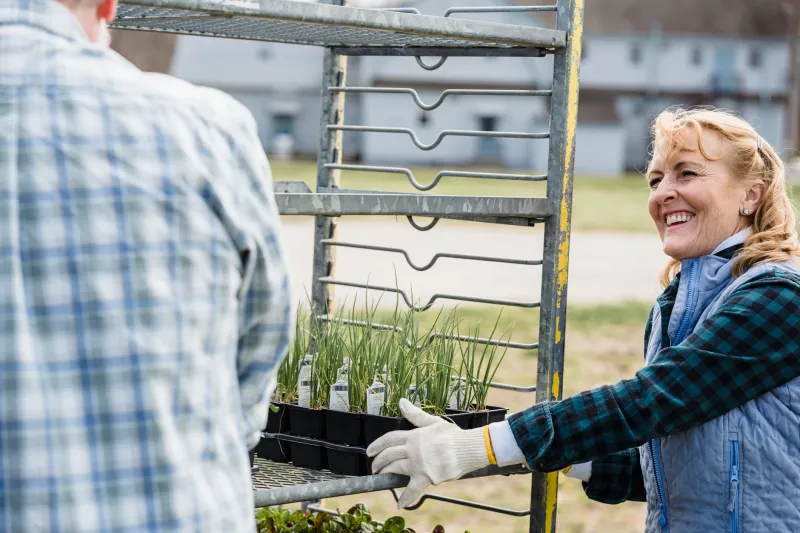
In neighborhoods where corner stores outnumber grocery outlets and fresh vegetables can feel like a luxury, a quiet revolution is taking root — quite literally. From vacant lots in Detroit to reclaimed schoolyards in South Los Angeles, community-led growing spaces are transforming not only what residents eat, but how they relate to their food, their land, and one another.
This is not simply a story about gardening. It is a story about sovereignty — the right of communities to define, produce, and govern their own food systems.
The Landscape of Food Insecurity in the United States
The United States Department of Agriculture (USDA) reported that approximately 44.2 million Americans lived in food-insecure households in 2023. While that figure alone is alarming, it does not fully capture the geographic and systemic dimensions of the crisis. Food deserts — defined as low-income census tracts where a significant portion of residents live more than one mile from a supermarket in urban areas, or more than ten miles in rural ones — affect millions of Americans, disproportionately in Black, Latino, and Indigenous communities.
Traditional food banks and pantries have long served as critical lifelines. Yet many community advocates and public health researchers have pointed to a fundamental limitation in charity-based food models: they address symptoms without confronting root causes. Recipients remain dependent on external supply chains, institutional schedules, and the availability of donated goods — often heavily processed or nearing expiration.
Community gardens, by contrast, offer something qualitatively different: agency.
From Recipients to Cultivators: A Shift in Philosophy
The concept of food sovereignty — originally articulated by the international peasant movement La Vía Campesina in 1996 — holds that communities have the right not only to access food, but to shape the policies and systems that govern how food is produced and distributed. In the American context, urban and suburban community gardens have become one of the most accessible expressions of this principle.
Organizations such as the Detroit Black Community Food Security Network have demonstrated what this looks like in practice. Their D-Town Farm, spanning more than seven acres on Detroit's west side, grows dozens of varieties of vegetables and herbs, operates a composting program, and runs food distribution directly within the community it serves. Critically, the farm is governed by community members themselves — decisions about what to plant, how to distribute harvests, and how to reinvest resources are made collectively.
This model reflects a broader national pattern. According to the American Community Gardening Association, the United States is home to an estimated 29,000 community gardens, a number that has grown substantially since the COVID-19 pandemic prompted renewed interest in local food resilience.
Real Stories, Real Impact
In Richmond, Virginia, the Tricycle Gardens organization works with schools, neighborhood associations, and housing developments to install and sustain growing spaces in areas with limited grocery access. Their work integrates youth education with food production, ensuring that knowledge about growing, harvesting, and cooking passes between generations.
In Minneapolis, Minnesota, the Hmong American Farmers Association has provided land access, technical assistance, and market connections to Southeast Asian immigrant farmers — preserving cultural food traditions while generating economic opportunity within communities that have historically been excluded from agricultural systems.
In East Austin, Texas, the Eastside Community Garden has become a gathering point for longtime residents navigating rapid gentrification. Participants describe the garden not only as a source of fresh food, but as a space where community identity is actively maintained — where elders share growing knowledge with younger neighbors, and where the act of tending the land becomes an act of belonging.
These narratives share a common thread: food sovereignty initiatives succeed when they are rooted in the specific cultural, historical, and geographic context of the communities they serve.
The Data Behind the Movement
Research consistently affirms what community organizers have long understood intuitively. A 2021 study published in the journal Landscape and Urban Planning found that community garden participants reported significantly higher fruit and vegetable consumption compared to non-participants in the same neighborhoods. Additional research from the Johns Hopkins Bloomberg School of Public Health has linked participation in community food growing to improved mental health outcomes, reduced social isolation, and stronger neighborhood cohesion.
Economically, community gardens also deliver measurable returns. The National Gardening Association estimates that a well-maintained garden plot can produce several hundred dollars' worth of produce annually — a meaningful supplement for families operating on tight budgets. When gardens incorporate distribution networks, the impact extends well beyond individual plot-holders.
Practical Pathways: Starting a Community Food Initiative
For readers inspired to bring a community garden or food sovereignty project to their own neighborhood, several foundational steps can make the difference between a short-lived effort and a sustainable institution.
Assess community needs and assets. Before selecting a site or purchasing seeds, engage with neighbors through listening sessions, surveys, or informal conversations. Understand what people actually want, what resources already exist, and what barriers — physical, cultural, or logistical — must be addressed.
Secure land access. Many municipalities have programs that lease vacant or underutilized public land to community organizations at low or no cost. Local land trusts and community development organizations can also be valuable partners in identifying and securing appropriate sites.
Build governance structures early. Sustainable community gardens are governed by the communities they serve. Establishing clear, inclusive decision-making processes from the outset helps prevent conflicts and ensures that the initiative remains accountable to its participants.
Connect to existing networks. Organizations such as the American Community Gardening Association, the National Farm to School Network, and regional food policy councils can provide technical assistance, funding leads, and peer connections.
Pursue diverse funding streams. Community gardens can access a range of support, including USDA Community Facilities grants, state department of agriculture programs, local foundation funding, and partnerships with healthcare institutions increasingly interested in food-as-medicine approaches.
The Role of Community Hubs in Supporting Local Food Systems
At Bhandara Community Hub, we recognize that food security is inseparable from community well-being. Our mission — nourishing lives and strengthening communities — is embodied in the work of every neighborhood organization that chooses to grow food collectively, share harvests equitably, and build lasting systems of mutual support.
We believe that community gardens are not ancillary programs. They are foundational infrastructure — as essential to neighborhood health as schools, libraries, and parks. When residents gain control over their food supply, they gain a measure of control over their futures.
The movement from food insecurity to food sovereignty is not an overnight transformation. It is the product of sustained effort, community trust, and a willingness to think beyond immediate relief toward long-term structural change. However, the evidence is clear: where communities have invested in growing their own power — alongside their own produce — the results are profound and enduring.
We invite every reader, regardless of where they live or what resources they currently possess, to consider how they might participate in this growing movement. Whether by joining an existing garden, advocating for land access policies, or simply sharing these stories with neighbors, every action contributes to a more food-sovereign future.
To learn more about community food initiatives in your area or to connect with resources through Bhandara Community Hub, visit bhandarazp.org.