More Than Hunger: The Invisible Toll Food Insecurity Takes on the Human Spirit—and How Communities Are Reclaiming It

There is a cost to hunger that never appears on a grocery receipt. It does not show up in a household budget spreadsheet or a federal poverty metric. It accumulates quietly, invisibly, in the bodies and minds of the millions of Americans who navigate each week uncertain of where their next meal will come from. Researchers, community practitioners, and—most compellingly—people who have lived through it are increasingly naming this cost for what it is: a tax on human dignity.
Understanding that tax, and organizing communities to refuse it, has become one of the most urgent and under-discussed conversations in American social welfare.
What Food Insecurity Actually Costs
The conventional framing of food insecurity centers on affordability. Can a family stretch its dollars far enough? Are benefits sufficient? Is the nearest food pantry accessible? These are legitimate and pressing concerns. But they describe only the surface of a much deeper wound.
Research published over the past decade has documented that food insecurity is, among other things, a chronic stressor. The persistent uncertainty of not knowing whether adequate food will be available activates the body's stress-response systems in ways that, over time, contribute to elevated cortisol levels, disrupted sleep, and heightened risk of anxiety and depression. A 2021 study in the American Journal of Preventive Medicine found that adults experiencing food insecurity were more than twice as likely to report serious psychological distress compared to their food-secure counterparts. Children fared no better: developmental researchers have consistently linked early-childhood food insecurity to increased behavioral difficulties, impaired executive function, and long-term emotional dysregulation.
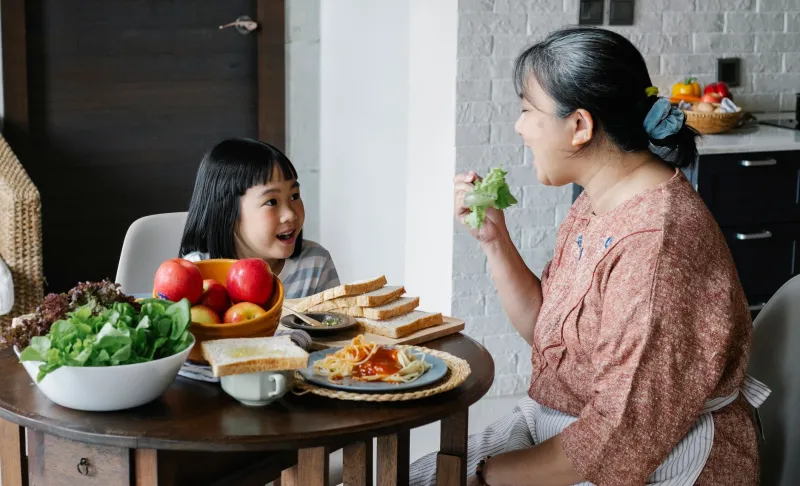
Then there is the social dimension. Food is not merely fuel in any human culture—it is the medium through which belonging is expressed and community is maintained. Birthday dinners, holiday gatherings, casual invitations to share a meal: all of these carry social weight. For individuals and families managing food insecurity, these ordinary moments become sources of shame, anxiety, and avoidance. Many describe quietly declining invitations, lying about having already eaten, or withdrawing from social networks rather than risk the exposure of their circumstances. The result is an isolation that compounds the original wound, severing people from the very relationships that might otherwise provide resilience.
The health consequences extend further still. When food budgets are constrained, nutritional quality is typically the first casualty. Calorie-dense, nutrient-poor options become default choices not because of ignorance or indifference, but because they are cheaper and more available. Over time, this nutritional compromise contributes to elevated rates of diet-related chronic disease—type 2 diabetes, hypertension, cardiovascular illness—among populations already facing the greatest structural barriers to healthcare. The cruel irony is that food insecurity, often framed as a temporary hardship, frequently generates long-term health costs that far exceed the price of adequate nutrition in the first place.
The Limits of Logistics
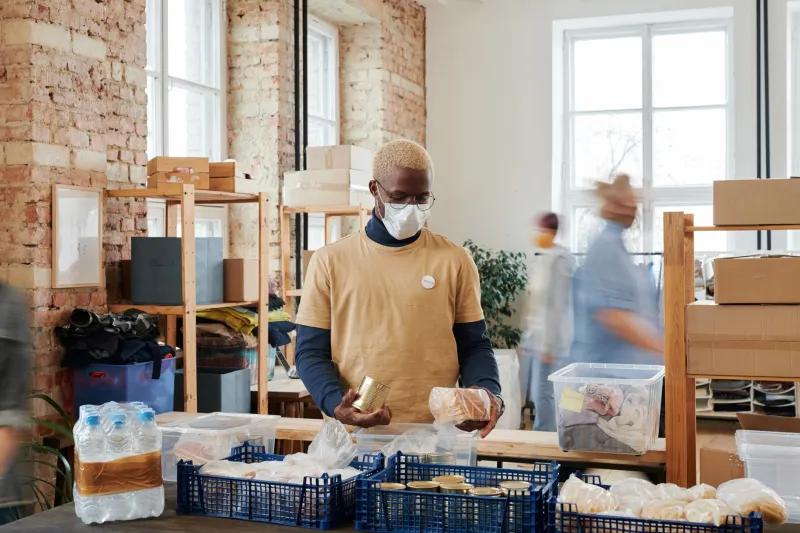
For decades, the dominant response to food insecurity in the United States has been logistical. Collect surplus food. Distribute it to those who need it. Measure success in pounds of food moved and households served. This model has fed many people, and the organizations that operate within it deserve genuine recognition for what they accomplish under constrained conditions.
But the logistical framework has a structural blind spot: it treats food insecurity as a supply problem rather than a dignity problem. It asks, How do we get food to people? without asking, What does it feel like to receive it this way? And the answer to that second question, voiced consistently by people with lived experience, is often discomforting. Long lines. Fluorescent-lit sorting rooms. The requirement to prove need through documentation. The sense of being processed rather than welcomed. Even well-intentioned programs can inadvertently communicate that the people they serve are problems to be managed rather than neighbors deserving of respect.
This is not a critique of individuals who work within these systems—many of whom are deeply compassionate and themselves from the communities they serve. It is a critique of a design philosophy that has historically prioritized throughput over transformation.
Dignity as Infrastructure
A different design philosophy is taking root in communities across the country, and its central premise is deceptively simple: dignity is not a feature to be added to food assistance programs. It is the foundation upon which any genuinely effective program must be built.
In practice, this means rethinking nearly everything. It means replacing clinical intake processes with warm, relational welcomes. It means creating spaces that feel like community gathering places rather than emergency distribution centers—where people might linger, share a meal together, and connect with others rather than collecting a box and departing as quickly as possible. It means offering choice, because choice is itself an expression of respect. A growing number of community food programs have adopted client-choice models, in which individuals select their own items from a market-style layout, rather than receiving pre-packed bags whose contents were determined by someone else.
Trauma-informed practice has emerged as another cornerstone of this approach. Organizations adopting this framework train their staff and volunteers to understand that many people accessing food assistance carry histories of hardship, loss, and institutional harm. Interactions are designed accordingly—with attention to language, physical environment, and the unspoken messages that spaces communicate. A room that is clean, well-lit, and thoughtfully arranged tells a visitor something about how they are regarded. So does being greeted by name.
Several community organizations have gone further still, embedding mental health support, peer connection, and social services directly into food programming—not as add-ons, but as integrated components of a holistic model. The logic is straightforward: if food insecurity is entangled with stress, isolation, and health vulnerability, then addressing only the food component leaves the underlying conditions intact.
What Healing Looks Like in Practice
In cities and rural communities alike, this philosophy is generating programs that look markedly different from traditional food pantries. Some operate as community kitchens where volunteers and participants prepare meals together, transforming the act of receiving food into an act of shared creation. Others function as drop-in social spaces that happen to offer nutritious food, where the primary experience is one of belonging rather than need. Still others are organized around peer leadership models, in which people with lived experience of food insecurity hold decision-making authority over how programs are designed and delivered.
What unites these approaches is a refusal to separate material support from relational care. The bhandara tradition—the ancient practice of communal, unconditional feeding that has nourished communities across cultures for centuries—embodies precisely this integration. Food offered in that spirit is not charity; it is an expression of shared humanity. It does not require the recipient to perform gratitude or demonstrate worthiness. It simply affirms that every person belongs at the table.
That affirmation, as it turns out, is not peripheral to the work of addressing food insecurity. It may be the work itself.
A Community's Obligation
The dignity tax is real, and it is being paid by millions of Americans right now—in stress hormones and sleepless nights, in missed social occasions and chronic illness, in the quiet accumulation of shame that tells a person their circumstances define their worth. No program, however well-designed, can single-handedly dismantle the structural conditions that produce food insecurity. Policy change, living wages, and equitable resource distribution remain essential.
But communities need not wait for systemic transformation to begin changing the experience of those who are struggling today. The choice to treat every person who walks through a program's doors as a full human being—deserving of warmth, choice, and connection—is available right now. It costs nothing extra. And the evidence suggests it changes everything.