Around the Table Together: How Shared Kitchens Are Rebuilding Community, Dignity, and Health
More Than a Meal
There is something ancient and deeply human about preparing food together. Long before modern supply chains and individualized meal delivery apps, communities gathered around fires and shared tables to nourish one another — not merely in body, but in spirit and belonging.
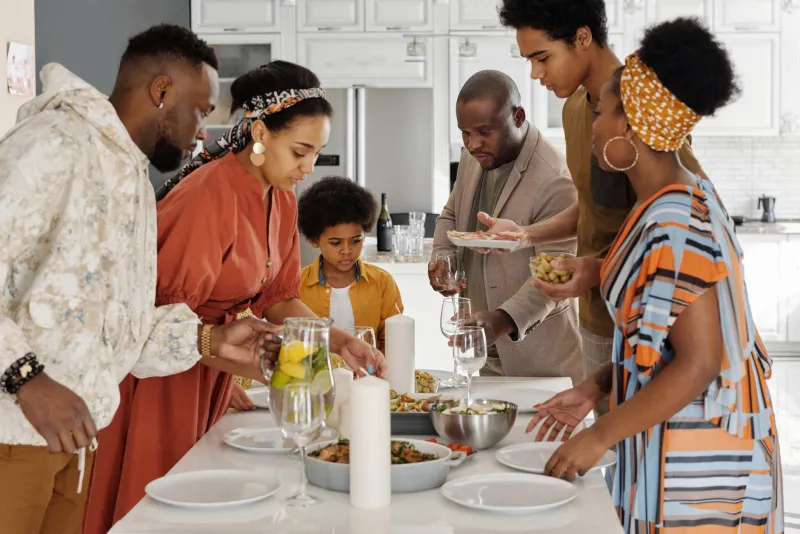
Today, a growing movement of community kitchens and shared cooking programs across the United States is reviving that tradition with remarkable results. These spaces — some housed in church basements, others in repurposed commercial facilities or purpose-built community centers — are proving that food is never just food. When people cook together, they share stories, transmit cultural knowledge, build trust, and create the social infrastructure that holds neighborhoods together.
For Bhandara Community Hub, whose mission centers on nourishing lives and strengthening communities, the rise of shared cooking programs represents exactly the kind of holistic, dignity-centered approach to community wellbeing that the moment demands.
The Loneliness Problem That Food Can Help Solve
The United States is, by many measures, experiencing an epidemic of social isolation. The U.S. Surgeon General's 2023 advisory on loneliness identified disconnection as a serious public health threat, one with consequences for physical and mental health comparable to smoking fifteen cigarettes a day. For low-income individuals, elderly residents, and recently arrived immigrants, isolation can be particularly acute.
Community kitchens directly address this dimension of wellbeing in ways that food pantries and meal delivery programs, valuable as they are, often cannot. When participants cook alongside one another — chopping vegetables, adjusting seasonings, sharing techniques passed down through generations — the activity itself becomes a vehicle for connection.
"People come in for the food, but they stay for each other," said the coordinator of a community kitchen program serving immigrant families in a mid-sized Midwestern city. "By the third or fourth session, they're exchanging phone numbers and checking in on each other outside of class. That's the real outcome."
Immigrant-Led Food Cooperatives: Preserving Culture, Building Power
Among the most dynamic expressions of the shared cooking movement are immigrant-led food cooperatives — enterprises that transform culinary tradition into economic opportunity while simultaneously addressing food access for underserved communities.
In cities including Minneapolis, Houston, and Philadelphia, cooperatives founded by immigrant women have created worker-owned catering businesses, community meal programs, and prepared food enterprises that generate income for their members while providing culturally appropriate food to neighbors who might otherwise struggle to find it. These are not charity operations. They are community-controlled economic institutions that treat their members as skilled professionals and decision-makers.
The model matters enormously. When immigrant communities are positioned as contributors and leaders — rather than as recipients of outside assistance — the outcomes are consistently more sustainable, more culturally resonant, and more empowering. Members of these cooperatives frequently describe a profound shift in how they see themselves within their adopted country: from marginalized outsiders to recognized contributors to the fabric of their communities.
Intergenerational Cooking Circles: Transmitting Knowledge, Honoring Elders
A distinct but equally powerful expression of the shared cooking movement is the intergenerational cooking circle — a program model that intentionally brings together older adults and younger community members to exchange culinary knowledge across generational lines.
These programs serve multiple purposes simultaneously. Elderly participants, many of whom face significant social isolation and the health risks that accompany it, gain meaningful engagement and the profound satisfaction of sharing expertise they have accumulated over a lifetime. Younger participants, including children, teenagers, and young adults, receive hands-on instruction in cooking skills that have become increasingly rare in an era of processed convenience foods.
In rural North Carolina, one such program pairs senior members of long-established African American communities with youth from the same neighborhoods to prepare traditional Southern dishes using locally grown produce. Participants report that the experience has deepened their appreciation for their own cultural heritage while equipping them with practical skills that improve their daily nutrition and reduce dependence on fast food and packaged meals.
The health implications are significant. Research consistently demonstrates that individuals who cook at home — particularly those who cook using whole, minimally processed ingredients — consume fewer calories, less sodium, and less added sugar than those who rely primarily on restaurant meals or packaged foods. Teaching cooking as a life skill is, in a very real sense, a public health intervention.
Addressing Stigma Through Shared Participation
One of the most frequently cited barriers to food assistance programs is stigma. Many individuals and families who qualify for food bank services, SNAP benefits, or other forms of nutritional support decline to seek them out because doing so feels shameful — a visible declaration of failure in a culture that prizes self-sufficiency above almost all else.
Community kitchens disrupt this dynamic with elegant effectiveness. When participation is framed around contribution, skill-sharing, and communal enjoyment rather than need, the transactional quality of traditional food assistance dissolves. Everyone in a shared kitchen is both giving and receiving. Everyone has something to offer and something to learn.
This reframing is not merely psychological — though its psychological benefits are real and well-documented. It reflects a more accurate understanding of how communities actually function. Food security is not a problem of individual inadequacy; it is a structural challenge that demands collective response. Shared cooking programs embody that collective response in their very architecture.
Economic Empowerment as a Core Outcome
Many community kitchen programs have evolved beyond cooking instruction and shared meals to become platforms for economic development. Participants who develop culinary skills in shared kitchen environments have gone on to launch small food businesses, secure employment in the food service industry, and create catering enterprises that generate sustainable income.
In Chicago, a community kitchen program that began as a response to food insecurity among recently resettled refugees has become a thriving social enterprise, with graduates operating food carts, pop-up restaurants, and catering operations that serve the broader metropolitan community. The kitchen itself generates revenue through fee-based use by food entrepreneurs, which helps sustain the program's free offerings for lower-income participants.
This economic dimension is essential to the long-term viability of shared cooking programs. When these spaces generate income as well as impact, they become self-reinforcing community assets rather than perpetually grant-dependent initiatives.
A Vision of Nourishment That Honors the Whole Person
At Bhandara Community Hub, we hold a vision of nourishment that extends well beyond caloric adequacy. To truly nourish a life is to support the whole person — their physical health, their social connections, their cultural identity, their sense of dignity and agency.
Shared cooking programs, at their best, do precisely this. They feed bodies and forge bonds. They honor the wisdom of elders and invest in the potential of youth. They celebrate the culinary traditions of immigrant communities while building bridges across cultural difference. They transform the act of preparing food from a solitary chore into a communal practice — and in doing so, remind us of something we have always known: that the table is where community begins.
The growth of this movement across American cities and towns is cause for genuine hope. Every community kitchen that opens its doors, every cooperative that empowers its members, every cooking circle that gathers around a stove is a small but meaningful act of resistance against the isolation, inequity, and indignity that food insecurity too often produces.
These spaces are not solving everything. But they are showing us what solving things together can look like.