Cooking Side by Side: How Communal Kitchens Are Quietly Dismantling the Shame Around Receiving Help
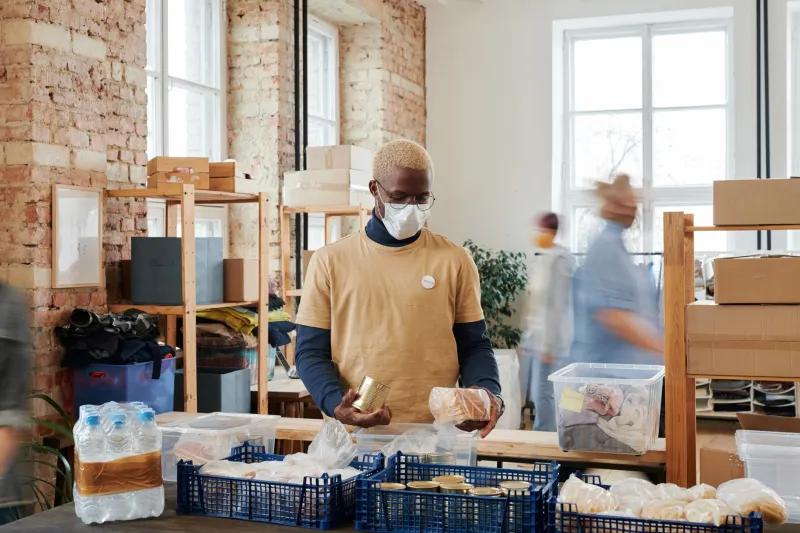
There is a particular kind of silence that fills a food pantry line. It is not the comfortable quiet of a library or the contemplative stillness of a park. It is the silence of people who do not want to be seen—who have arrived out of necessity but would rather be anywhere else. That silence carries weight. It carries the accumulated pressure of a culture that has long treated the act of asking for help as evidence of personal failure.
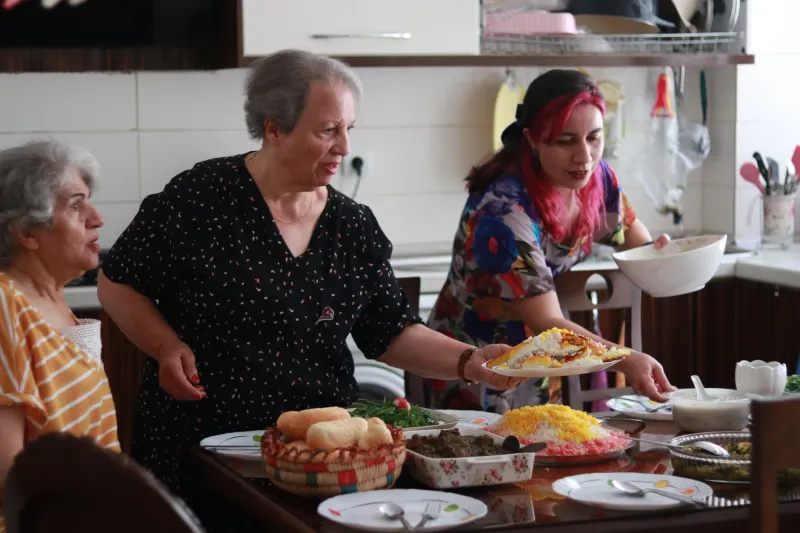
But in a growing number of cities and towns across the United States, a different kind of space is emerging. And in those spaces, the silence is being replaced by something far more powerful: the sound of conversation, the smell of garlic softening in a pan, and the particular ease that settles over a room when people are working toward a shared meal.
Communal kitchens and shared cooking programs are not new. What is new is the intentionality with which many of them are being designed—not merely as logistical solutions to hunger, but as deliberate interventions against the psychological harm that shame inflicts on people who need support.
The Invisible Wound That Hunger Leaves Behind
Food insecurity in America is rarely discussed in terms of its emotional consequences. Policy conversations tend to focus on caloric deficits, SNAP enrollment rates, and pantry throughput. These metrics matter enormously. But they measure what people receive, not how receiving it makes them feel.
Research consistently shows that shame is one of the most significant barriers to seeking food assistance. Many individuals who qualify for programs—whether federal nutrition benefits or local pantry services—choose not to access them because the act of doing so feels like a public admission of inadequacy. This is particularly acute in communities where self-reliance is culturally prized, and where accepting help is perceived as a moral shortcoming rather than a practical response to difficult circumstances.
The consequences of this shame are measurable. People delay seeking assistance until their situations become critical. They ration food in ways that damage their health. They absorb the stress of scarcity in isolation, without the social buffers that might otherwise soften its impact. Shame, in this sense, is not merely an emotional inconvenience—it is a public health problem.
What Changes When You Cook Together
The communal kitchen model addresses this problem not by arguing against shame, but by architecturally removing the conditions that produce it.
In a traditional food distribution setting, the roles are clearly delineated: there are those who give and those who receive. That distinction, however gently it is managed, reinforces a hierarchy. The person receiving assistance is reminded, at every step, of their position in that hierarchy.
In a communal kitchen, those roles dissolve. Everyone present is a participant. One person may bring professional culinary training; another may contribute knowledge of a family recipe passed down through generations; a third may simply show up and learn. The contributions are different, but they are all contributions. No one is merely a recipient.
This structural shift has profound psychological effects. When people are positioned as participants rather than beneficiaries, their relationship to the space—and to themselves within it—changes fundamentally. They are not there because they have failed. They are there because they belong.
Programs operating on this model across the country report consistent findings: participants engage more openly, return more reliably, and speak about their experiences with a sense of pride rather than reluctance. The food they prepare and eat together becomes associated not with need, but with community.
Dignity Is Not a Luxury—It Is a Design Principle
The most effective communal kitchen programs treat dignity not as an afterthought but as a foundational design principle. This manifests in decisions that might seem small in isolation but accumulate into something significant.
It shows up in the quality of the physical space—whether it is clean, welcoming, and aesthetically considered, or whether it signals, through its institutional austerity, that those who use it are not expected to expect much. It shows up in how participants are addressed, whether their knowledge and preferences are solicited, and whether they have any meaningful agency in shaping what gets cooked and how.
It shows up, perhaps most importantly, in the language used to describe the program itself. Organizations that have moved away from terms like "food assistance" or "meal distribution" in favor of language that emphasizes community, collaboration, and shared nourishment report that this linguistic shift genuinely affects how participants perceive their own involvement. Words carry architecture. The way a program describes itself shapes the way participants understand their place within it.
Mutual Care as a Counter-Narrative
Underlying the communal kitchen model is a philosophical reorientation that communities like Bhandara have long understood: that feeding one another is not charity. It is kinship. It is one of the most fundamental expressions of what it means to be in relationship with other human beings.
The Bhandara tradition—rooted in the practice of offering food freely and without condition to all who come—embodies a vision of nourishment as a communal act rather than a transactional one. When food is offered in this spirit, the distinction between giver and receiver becomes meaningless. Everyone present is both.
This is the counter-narrative that communal kitchens are, often without explicitly naming it, working to establish. In a culture that has commodified food and individualized hunger, these spaces insist on something older and more durable: that eating together is a form of care that belongs to everyone, not a service that belongs to those who can afford it.
The Work That Remains
None of this is to suggest that communal kitchens are a complete solution to food insecurity, or that dismantling shame is a substitute for dismantling the structural inequities that produce hunger in the first place. Policy reform, economic justice, and equitable access to nutritious food remain urgent and unfinished projects.
But the psychological dimension of food insecurity is real, and it deserves serious attention. A system that delivers calories while compounding shame is not a system that serves whole human beings. The communal kitchen model represents a meaningful effort to do better—to recognize that people need not only food, but the experience of receiving it in a way that affirms rather than diminishes their dignity.
As these programs continue to grow and evolve across the United States, the most important question they raise may not be logistical at all. It may be this: What would it mean to build a food system in which no one felt ashamed to eat?
The answer, it turns out, might begin with an apron, a shared cutting board, and an open invitation to cook.