Eating Alone in a Crowded Country: The Hidden Crisis of Solitary Meals and What Community Can Cure
There is a particular kind of hunger that a full plate cannot satisfy. It arrives not in the stomach but somewhere deeper — in the silence that fills a kitchen when no one else is there, in the absence of voices, laughter, or the ordinary sound of another person pouring a glass of water. Across the United States, this experience has become routine for tens of millions of people, and its consequences are far more serious than most policymakers, public health officials, or community leaders have been willing to acknowledge.
Social isolation, long recognized as a driver of depression and cognitive decline, is now being examined through a new and troubling lens: its relationship to food. Researchers are finding that eating alone does not simply reflect loneliness — it actively reshapes how people relate to food, what they choose to eat, how much they consume, and how their bodies process nutrition. The table, once the center of family and community life, has become for many Americans a monument to disconnection.
What the Science Is Telling Us
A growing body of research confirms what many people already feel intuitively. Studies published in peer-reviewed journals, including work from the United Kingdom's Campaign to End Loneliness and domestic research through institutions such as the AARP Foundation, have found consistent associations between eating in solitude and poorer dietary quality. People who regularly dine alone consume fewer vegetables, less dietary fiber, and a higher proportion of ultra-processed convenience foods. They are also more likely to skip meals entirely.
The physiological mechanisms behind these patterns are not fully understood, but several theories have gained traction. Social eating appears to activate reward pathways in the brain that enhance the pleasure derived from food, which in turn encourages more mindful, deliberate consumption. When that social stimulus is absent, the meal becomes purely functional — or worse, a source of anxiety. Cortisol levels, elevated by chronic loneliness, can disrupt appetite regulation and metabolic function, meaning that isolated individuals may be extracting less nutritional benefit from the food they do consume.
For those already experiencing food insecurity, the compounding effect is severe. A person who lacks reliable access to nutritious food and who eats that food alone faces a double burden: the physical deficit of inadequate nutrition and the psychological weight of isolation that undermines their body's ability to use what little they have.
Three Portraits of a Quiet Epidemic
In a retirement community on the outskirts of Phoenix, Arizona, a 74-year-old woman named Eleanor prepares dinner each evening for one. Her children live out of state. Her husband passed away three years ago. She describes her meals as "maintenance" — something she does because she must, not because she finds any pleasure in it. She has lost fifteen pounds in two years, not because food is unavailable, but because she rarely feels motivated to cook a full meal for herself alone.
In a mid-sized city in the Midwest, a software developer who relocated for work eats most of his meals at his desk or standing over the kitchen sink. His days are filled with digital meetings, but he estimates he has not shared a meal with another person in over three weeks. He reports persistent fatigue and has noticed himself reaching for high-sugar snacks in the late afternoon — a pattern he attributes to stress but which researchers might more precisely describe as a behavioral response to the absence of social eating cues.
In a Somali immigrant community in Minneapolis, a group of women recognized this problem in their own neighborhood several years ago. Elderly community members, separated from extended family networks, were eating erratically and reporting increased feelings of depression. The solution these women devised was not a food pantry or a nutrition program. It was a weekly shared meal, held in a community room, where isolation was the primary problem being addressed and food was the vehicle through which connection was restored.
The Bhandara Principle: Nourishment Is Never Solely About Food
The bhandara tradition, rooted in South Asian communal practice, has always understood something that modern American food policy has largely ignored: nourishment is a social act. In bhandara, food is prepared and offered to all without distinction — no means test, no intake form, no separation of the deserving from the undeserving. But equally important is the fact that the meal is shared. People sit together. The act of eating becomes an act of belonging.
This principle carries profound implications for how communities in the United States might address the intersection of isolation and food insecurity. The problem is not always the absence of food. Sometimes it is the absence of the conditions under which food becomes truly nourishing.
Community organizations that have embraced this understanding are producing results that conventional food assistance programs struggle to replicate. In San Francisco, the Curry Senior Center has operated communal dining programs for decades, serving not just meals but the social infrastructure that makes those meals matter. Participants report improvements in mood, increased appetite, and greater willingness to seek other health services — outcomes that a bag of groceries delivered to a doorstep simply cannot generate.
Building the Table: Practical Models for Communal Dining
Creating low-cost communal dining spaces does not require large budgets or specialized facilities. Community organizations, faith communities, libraries, and neighborhood associations are among the institutions already positioned to host regular shared meals. The following models have demonstrated effectiveness across a range of settings.
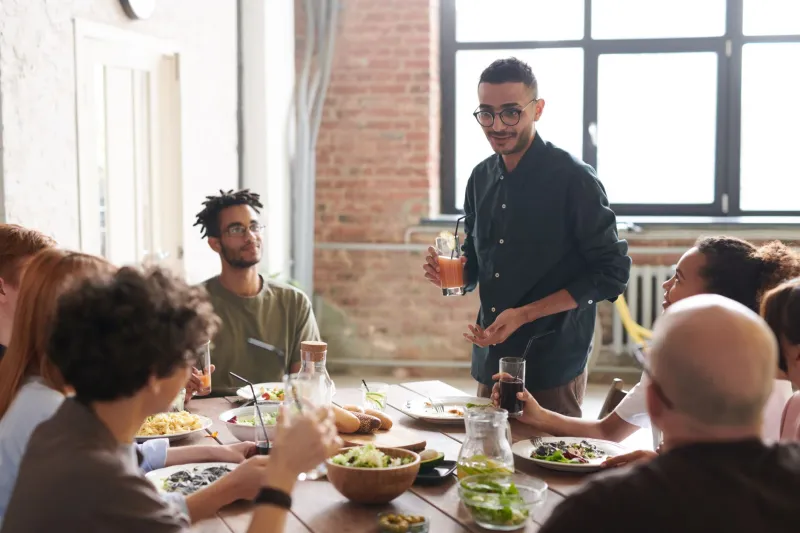
The Weekly Community Supper involves hosting a recurring meal in an accessible community space — a church hall, a community center meeting room, or even a neighborhood park pavilion. Costs can be minimized through partnerships with local restaurants, food recovery organizations, and volunteer cooks. The emphasis should be placed on consistency and welcome rather than culinary sophistication.
The Neighbor Table Program connects isolated individuals — particularly seniors and recent transplants — with nearby households willing to include them in regular mealtimes. Organizations in cities including Portland, Oregon, and Columbus, Ohio, have piloted versions of this model with measurable reductions in self-reported loneliness among participants.
Culturally Rooted Meal Circles recognize that food is identity. Immigrant and refugee communities often possess rich traditions of communal cooking and eating that have been disrupted by the pressures of resettlement. Supporting these communities in recreating their own food-centered gathering practices — rather than importing external models — honors both dignity and cultural knowledge.
A Call to Recognize What Is Missing
America has invested significantly in addressing food access — in food banks, SNAP benefits, school lunch programs, and nutrition education. These investments are vital and must continue. But the conversation has too rarely included the equally critical question of the conditions under which food is consumed.
A meal eaten in isolation is nutritionally incomplete in ways that a calorie count cannot capture. Loneliness is not a soft concern to be addressed after the harder problems are solved. It is itself a hard problem, with measurable health consequences, and it is deeply intertwined with the food systems and communities that organizations like Bhandara Community Hub exist to serve.
The tradition that gives this organization its name understood long ago that the table is more than a surface on which food is placed. It is the site where community becomes real, where strangers become neighbors, and where nourishment — in its fullest sense — actually occurs. Rebuilding that table, one shared meal at a time, is among the most consequential work any community can undertake.