Beyond the Handout: How Food Pantries Are Reimagining Themselves as Places of Belonging
For decades, the image of a food pantry has remained largely unchanged in the American imagination: folding tables lined with canned goods, a volunteer handing a pre-packed box across a counter, a brief exchange of paperwork, and a quiet exit through a side door. The transaction is efficient. It is also, for many who depend on it, quietly humiliating.
That model is now being challenged — not by critics standing outside the system, but by the organizations operating within it who have grown dissatisfied with the gap between what they offer and what their neighbors actually need.
The Weight of the Traditional Model
Food insecurity in the United States affects tens of millions of people across every demographic, geography, and income bracket. Yet studies consistently show that a significant portion of those who qualify for food assistance never seek it. Shame, stigma, and the fear of being seen as a burden are among the most commonly cited reasons.
The conventional pantry setup, however unintentionally, can reinforce those feelings. When individuals are handed a box of items selected by someone else — items that may not align with their dietary needs, cultural traditions, or family preferences — the message embedded in that exchange can feel less like community support and more like charity dispensed from a distance.
Researchers studying food assistance have noted that the psychological toll of navigating such systems compounds the material stress of food insecurity itself. People describe feeling watched, evaluated, and reduced to a category of need rather than recognized as whole persons with preferences, knowledge, and dignity.
A Different Architecture of Care
A growing movement within the food access sector is responding to this reality by fundamentally redesigning the physical and relational architecture of pantry spaces. The changes are both structural and philosophical.
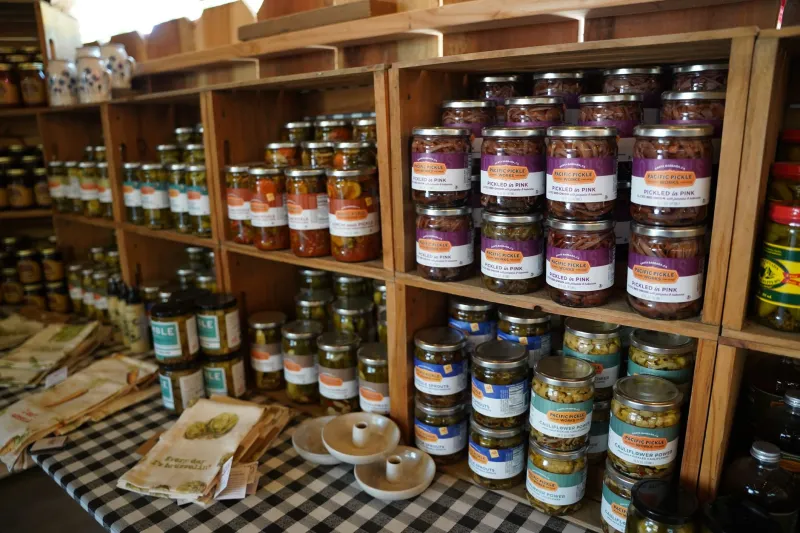
Open-shelf or client-choice models allow visitors to move through a space that resembles a small grocery store — selecting items from shelves or bins, making decisions based on their own household's needs, and exercising the same basic agency that most Americans take for granted at a supermarket. Staff and volunteers serve as guides and companions rather than gatekeepers.
Some organizations have gone further, removing intake forms from the entry point and placing them later in the visit, or eliminating redundant verification processes that can feel interrogative. Others have introduced seating areas, community bulletin boards, and informal gathering spaces that invite people to linger rather than rush through.
The effect on participants is measurable. Organizations that have adopted these models report higher rates of return visits, greater willingness among first-time visitors to come back, and qualitative feedback that consistently centers on words like "respected," "comfortable," and "welcome."
What Transformation Looks Like on the Ground
In communities across the country — from mid-sized Midwestern cities to rural Southern counties to dense urban neighborhoods — food organizations are navigating the practical and cultural work of this transition.
The challenges are real. Shifting from a pre-packed model to client-choice requires more physical space, more careful inventory management, and a recalibration of volunteer roles. Funders accustomed to measuring impact in pounds of food distributed may need to be introduced to different metrics. Long-standing donors who associate food assistance with a particular visual image may require patient engagement.
And yet the organizations that have moved through these obstacles describe the transformation as irreversible. Once staff and volunteers experience the difference in how visitors carry themselves through a choice-based space — the way a parent examines labels, the way a child picks out a piece of fruit, the way an elderly resident pauses to chat without feeling they are taking up space they haven't earned — returning to the old model becomes unthinkable.
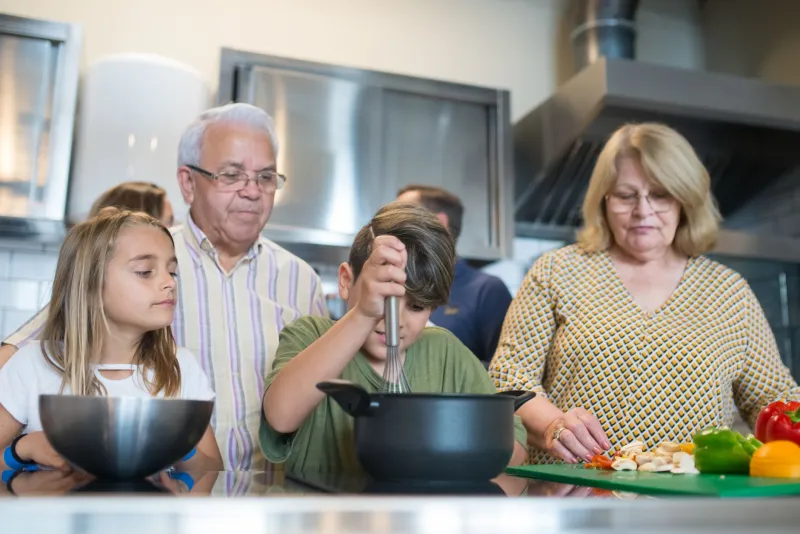
Some pantries have expanded their reimagining beyond the shelves themselves. Cooking demonstrations, seed libraries, nutrition conversations, and connections to other community services have been woven into the pantry experience, transforming what was once a transactional stop into a genuine community node.
Dignity as Infrastructure
There is a tendency in discussions about food assistance to treat dignity as a soft concern — admirable in principle but secondary to the hard logistics of moving food from donors to people who need it. The evidence increasingly suggests this framing is mistaken.
When people feel respected in the spaces where they seek help, they are more likely to engage consistently, to share information about those spaces with others who need them, and to participate in the broader life of the organization. Dignity, in this sense, is not a luxury added on top of service delivery — it is a core component of whether that service delivery actually reaches people.
The ancient principle that animates the Bhandara tradition — that food shared freely, without hierarchy or condition, nourishes something beyond the body — finds a contemporary expression in these redesigned pantry spaces. The question those organizations are asking is not simply "how do we feed more people?" but "how do we create spaces where people feel fed in every sense of the word?"
The Broader Implications
The pantry redesign movement carries implications that extend well beyond food. It is part of a larger reckoning within the nonprofit and social service sector about the relationship between helper and helped — about who holds power in those relationships, and what it costs the people seeking assistance when that power is distributed without care.
Community organizations in housing, healthcare, and social services are grappling with similar questions. The food pantry, because it involves something as fundamental and intimate as nourishment, may be one of the most visible and emotionally resonant sites for working through those questions.
What the most thoughtful practitioners in this space are demonstrating is that redesigning for dignity does not require abandoning efficiency or sustainability. It requires expanding the definition of what counts as a successful outcome — and trusting that when people are treated as neighbors rather than recipients, the community as a whole grows stronger.
The folding table and the pre-packed box served a purpose. For many communities, they were a lifeline. But a lifeline is not the same as belonging, and the organizations remaking their spaces understand that what their neighbors need is not just food — it is the experience of being fully seen, genuinely welcomed, and met without condition.
That is not a small thing. In a culture that has long conflated need with unworthiness, it may be one of the most radical acts a community organization can undertake.