Growing More Than Food: How Urban Farming Cooperatives Are Cultivating Economic Power From the Ground Up
Beyond the Harvest
It is easy to frame urban farming as a story about tomatoes. The photographs are appealing—raised beds bursting with color, children pressing seeds into soil, seniors tending rows of greens in lots that once held nothing but rubble. The produce is real, the nutritional benefit is genuine, and in communities where fresh food is scarce, every harvest matters.
But some of the most significant urban agriculture projects in the United States are telling a different story—one in which the soil is not primarily a medium for growing food but a platform for growing economic agency. In these projects, the farm is a classroom, a cooperative business, a legal entity that holds assets, and a training ground for skills that translate into livelihoods. The produce is the beginning of the story, not its conclusion.
This distinction matters enormously for how we assess the value of community farming and how we invest in it. If urban agriculture is primarily about fresh produce, then a mobile farmers' market or a produce delivery program might accomplish the same goal more efficiently. But if urban agriculture is about building the conditions under which marginalized communities can generate and retain wealth—then the farm itself, as a cooperatively owned institution, becomes irreplaceable.
The Cooperative Structure as the Core Innovation
The organizational model that distinguishes the most economically transformative urban farms from their counterparts is cooperative ownership. Rather than being managed by a nonprofit that serves community members as clients, a cooperative farm is owned and governed by its members—the farmers, the workers, the community residents who hold a stake in the enterprise.
This structure changes everything about the economic relationship between participants and the organization. In a traditional nonprofit food program, participants receive services. In a cooperative, participants hold equity. They share in the revenues the farm generates from market sales, catering contracts, Community Supported Agriculture subscriptions, and other income streams. They vote on how those revenues are reinvested. They build a track record of cooperative governance that is recognized by lenders and investors.
In Cleveland, Ohio, the Earthworks Urban Farm has operated on a cooperative model for more than a decade, growing on several acres of land distributed across the city's predominantly Black east side. The farm employs full-time workers who are also member-owners, operates a weekly farm stand, supplies produce to local restaurants, and runs a year-round training program that has placed dozens of graduates in agricultural and food-sector jobs.
"The ownership piece is not symbolic," says the farm's general manager. "It determines who benefits when this thing succeeds. And it determines who has a reason to make it succeed."
Youth at the Helm
Some of the most compelling models in urban cooperative agriculture are youth-led—programs that deliberately place young people, many of them from communities with high rates of unemployment and limited access to vocational pathways, in roles of genuine agricultural and business responsibility.
In Baltimore, a program called GreenRise operates a network of urban farms staffed almost entirely by teenagers from the surrounding neighborhoods. Participants are paid a stipend during their first season, then offered the opportunity to advance into supervisory roles that carry higher wages and equity stakes in the cooperative. By their third year, many participants are managing their own growing plots, developing their own customer relationships, and mentoring incoming cohorts.
The program tracks outcomes beyond produce yield: high school graduation rates among participants run significantly above city averages, and a substantial portion of program alumni have gone on to pursue post-secondary education or careers in agriculture, food science, culinary arts, or environmental work.
"We're not running a garden program," says one of GreenRise's founding directors. "We're running a business that happens to grow food, and the young people running it know the difference. That knowledge—that you can build something real—is what changes their sense of what's possible."
Seniors as Stewards and Stakeholders
At the opposite end of the age spectrum, a growing number of urban agriculture cooperatives are recognizing older residents not as beneficiaries of programming but as experienced stewards whose knowledge and labor are genuinely valuable.
In Detroit's Grandmont-Rosedale neighborhood, a senior-led cooperative called The Long Row has operated a series of community gardens and a small orchard for eight years. Members—most of them retirees ranging from their early sixties to their mid-eighties—hold ownership shares in the cooperative, contribute labor according to their capacity, and receive both a share of the harvest and a portion of the cooperative's annual market revenues.
For many members, the income is modest but meaningful: a supplement to fixed retirement incomes that helps cover utilities or prescription costs. But participants consistently describe the cooperative's value in terms that go beyond the financial. The work provides physical activity, social connection, and a sense of purpose that many describe as transformative after years of retirement isolation.
"I spent thirty years working for someone else," says one founding member, a retired autoworker now in his seventies. "Here, I own a piece of something. That's not a small thing when you're my age."
Land as Long-Term Asset
One of the most significant strategic choices made by the most durable urban farming cooperatives is the deliberate pursuit of land ownership or long-term secure tenure. Cooperatives that farm on land they do not control are perpetually vulnerable to displacement as urban land values shift—a particular risk in neighborhoods experiencing gentrification pressures.
Several organizations have addressed this challenge by partnering with community land trusts, which hold land in permanent community ownership and lease it to cooperative users at below-market rates. Others have pursued direct land acquisition through patient capital strategies, accumulating land parcels over time as they become available.
In Minneapolis, a cooperative called North End Growers has assembled six acres of land across the city's North Side through a combination of city surplus land sales, private donations, and a community investment fund that allowed local residents to purchase small ownership stakes in the land itself. The result is a farming enterprise whose land base is structurally insulated from market speculation—a form of asset protection that benefits not only the cooperative but the broader neighborhood.
The Dignity of Production
Running through all of these models is a conviction that the relationship between a person and the food system matters—not only in terms of access but in terms of agency. There is a profound difference between receiving food and producing it, between being served and being an owner, between depending on a system and helping to govern it.
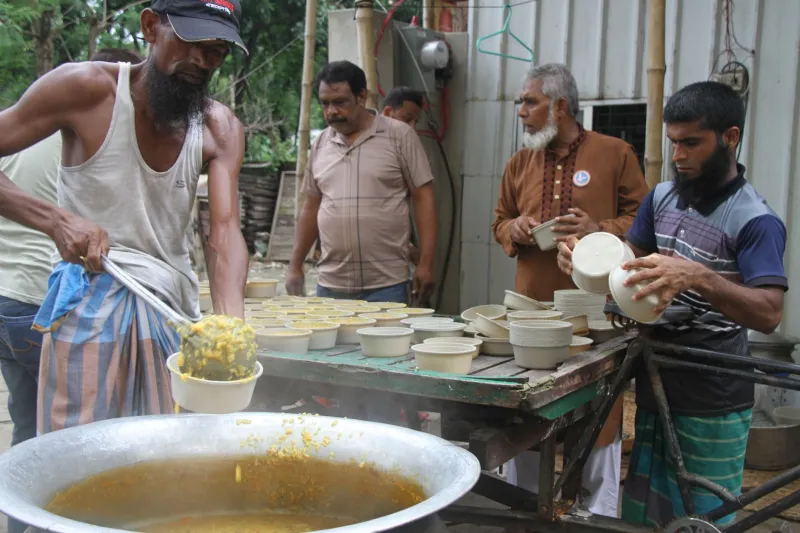
The bhandara tradition has always understood that nourishing a community means more than filling its plates. It means creating the conditions under which people can sustain themselves—and one another—with dignity and purpose. The urban farming cooperatives working across American cities are building those conditions from the soil up, one growing season at a time.
The harvest they are working toward is measured not only in pounds of produce but in livelihoods created, in wealth retained within communities, in young people who know what it means to own something they built with their own hands. That harvest, when it comes in, will feed something deeper than hunger.