The Empty Chair: How Eating Alone Has Become a Quiet Public Health Emergency—and What Communities Are Doing About It
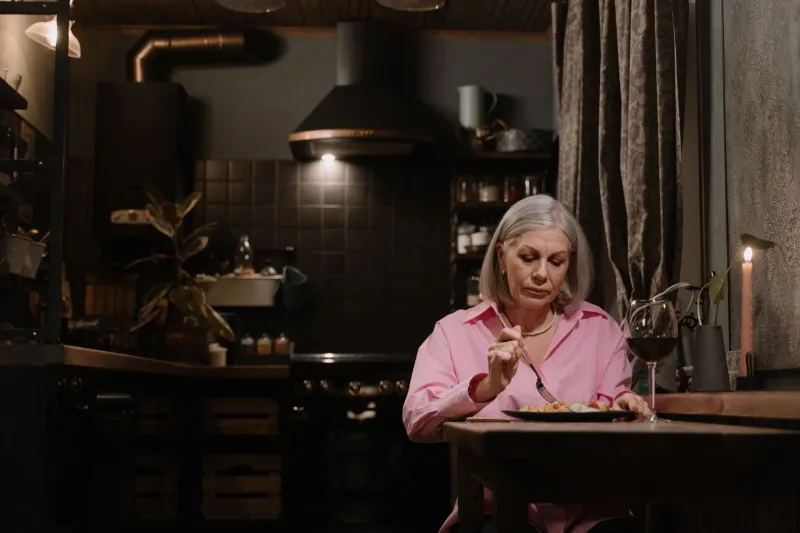
Every evening, in apartment buildings and suburban ranch houses and rural farmsteads across the United States, the same quiet ritual plays out: a single plate set at a kitchen table, a television switched on for company, a meal consumed without conversation. No one marks the occasion. No one counts it. But it is happening, with extraordinary frequency, in a country that has long prided itself on the cultural centrality of the shared meal.
Solitary eating is not new. But its scale in contemporary America is remarkable, and its consequences — documented now across a growing body of public health research — are serious enough to demand a response that the country has not yet mustered.
The Numbers Behind the Empty Plate
According to data from the American Time Use Survey, nearly half of all eating occasions in the United States now occur alone. Among adults over sixty-five, the proportion is significantly higher: the U.S. Census Bureau estimates that more than fourteen million older Americans live by themselves, and for many, solitary dining is the daily norm rather than the exception.
The picture is not limited to the elderly. The rise of single-person households — now the most common household type in the United States — means that tens of millions of adults across age groups regularly eat without company. Single parents, whose schedules are often consumed by work and caregiving responsibilities, frequently eat separately from their children or skip meals altogether. Young adults living in cities, far from family networks, report high rates of eating alone despite being surrounded by people.
The loneliness epidemic — formally recognized by the U.S. Surgeon General in a 2023 advisory — is, in part, a mealtime crisis. And its health consequences are not metaphorical.
What the Research Reveals
The health literature on solitary eating is both extensive and sobering. A landmark study published in the journal Heart found that adults who regularly eat alone face a significantly elevated risk of cardiovascular disease compared to those who eat with others. Research from South Korea — where solitary eating has been studied extensively as a social phenomenon — found associations between eating alone and higher rates of depression, metabolic syndrome, and poor dietary quality.
The mechanisms are multiple. People eating alone tend to make less nutritious food choices, consume meals more quickly, pay less attention to hunger and satiety cues, and derive less psychological satisfaction from eating. The social dimension of the shared meal — the conversation, the attention paid to food, the sense of being cared for — turns out to be nutritionally significant in its own right.
For older adults, the consequences are particularly acute. Research published in the Journal of the Academy of Nutrition and Dietetics found that elderly individuals who eat alone consistently consume fewer calories and a narrower range of nutrients than those who eat with others, even when access to food is equivalent. Isolation at mealtimes compounds the physical vulnerability of aging in ways that no vitamin supplement can address.
The economic dimensions are equally concerning. Poor nutrition and social isolation are both independent risk factors for a range of costly chronic conditions — heart disease, type 2 diabetes, depression, cognitive decline. A population that eats alone, consistently and over time, is a population generating significant preventable health costs.
The Tradition That Points Toward a Solution
The concept of the bhandara — the communal meal offered freely to all, without distinction of status or circumstance — speaks directly to the problem that solitary eating represents. It is rooted in the understanding that food is not merely fuel, and that eating is not merely a biological function. It is a social act, one that creates and reinforces bonds of mutual recognition and care. When those bonds are absent from the mealtime experience, something essential is lost.
This understanding is ancient. What is new is the urgency of applying it systematically to a society in which the structures that once created natural opportunities for shared eating — extended family households, close-knit neighborhoods, communal religious life — have been significantly eroded.
Innovative Responses Taking Root
Across the country, community organizations, public health advocates, and social entrepreneurs are developing creative approaches to the problem of solitary eating. Their solutions are varied in form but unified in purpose: to rebuild the social infrastructure of the shared meal.
Pop-Up Dinner Clubs and Community Supper Tables
In cities from Portland, Oregon, to Louisville, Kentucky, informal community dinner clubs have emerged as accessible gathering points for people who might otherwise eat alone. Some are organized through neighborhood associations or faith communities. Others are coordinated through social platforms that connect strangers around a shared meal. The format matters less than the function: providing a regular, low-barrier occasion for people to eat in company.
Organizations like The People's Kitchen in Pittsburgh have taken a more structured approach, hosting weekly community suppers that are open to all, free of charge, and deliberately designed to mix participants across age, background, and circumstance. The model draws explicitly on the tradition of the communal table as a site of democratic encounter.
Intergenerational Meal Programs
Some of the most promising interventions pair isolated older adults with younger community members in structured meal-sharing programs. In Minneapolis, a program operated through a local senior services organization matches college students with elderly neighbors for weekly shared dinners. Participants on both sides report significant reductions in loneliness, and the older adults in the program show measurable improvements in dietary quality and social engagement.
These programs recognize that isolation is not uniquely an elder problem — it affects young adults at high rates as well — and that the exchange of company across generations carries mutual benefit.
Technology as a Bridge, Not a Replacement
The use of technology to address mealtime isolation is a nuanced proposition. Screen-mediated meals — video calls with family members, virtual dinner parties — offer a partial substitute for in-person company, and research suggests they do provide some of the psychological benefits of shared eating. For homebound individuals, they may be the most accessible option available.
Organizations working in this space are careful, however, to position technology as a bridge to in-person connection rather than a permanent substitute. The goal is not to replicate the communal meal on a screen but to use digital tools to identify isolated individuals and connect them with real-world community resources.
A Public Health Imperative That Requires a Community Response
The problem of solitary eating will not be solved by any single program or policy. It is, at its root, a symptom of broader patterns of social fragmentation that have been decades in the making. Addressing it meaningfully requires a sustained commitment to rebuilding the community infrastructure — the shared spaces, the regular gathering occasions, the cultures of hospitality — within which the shared meal can once again become a normal part of daily life.
Public health agencies, community organizations, urban planners, and policymakers all have roles to play. So do individuals who are willing to set an extra place at the table, to knock on a neighbor's door, to organize a supper club in a church basement or a community center kitchen.
The empty chair at the American table is not an inevitable feature of modern life. It is a problem with known causes and addressable solutions. The communities that are already working on those solutions deserve recognition, resources, and replication. The millions of people eating alone tonight deserve better than silence for company.