Who Knows Best? The Case for Letting Communities Design Their Own Food Solutions
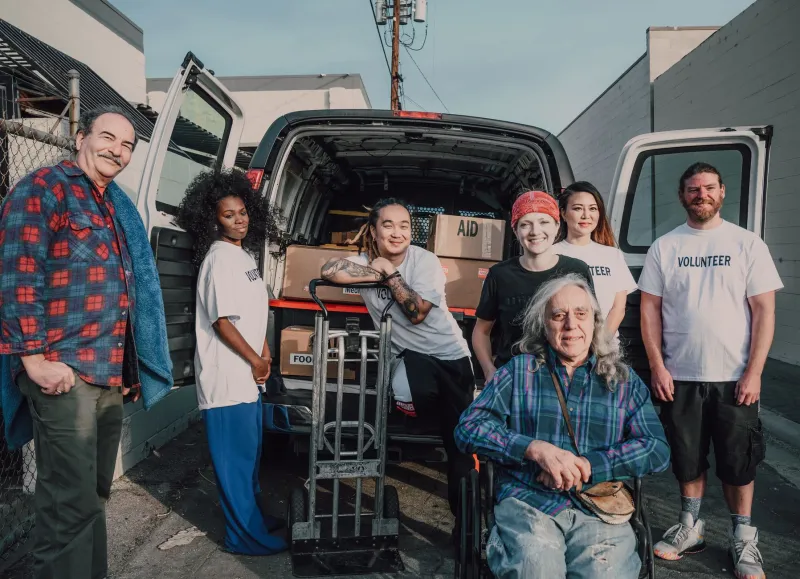
There is a particular kind of frustration that arises when help arrives in the wrong form. A food pantry stocked with items that do not reflect the dietary traditions of the neighborhood it serves. A meal program scheduled at hours incompatible with shift workers' schedules. A nutrition education workshop delivered in English to a predominantly Spanish-speaking community. These are not hypothetical failures. They are recurring features of a food assistance model built on a fundamental structural assumption: that organizations external to a community are best positioned to determine what that community needs.
That assumption is increasingly difficult to defend.
The Architecture of Traditional Food Charity
The conventional nonprofit model of food assistance, as it has evolved over the past half-century in the United States, operates largely on a service delivery framework. Donors and foundations provide funding. Organizations design programs. Communities receive services. Evaluation metrics flow upward—toward funders—rather than laterally, toward participants.
This architecture is not without virtue. Food banks, soup kitchens, and emergency pantry programs have provided essential sustenance to millions of Americans navigating crisis. Their contributions are real and should not be minimized.
But service delivery, by its nature, positions recipients as passive beneficiaries rather than active agents. And passivity, research consistently shows, is correlated with worse long-term outcomes—not because of any failing on the part of those receiving help, but because solutions disconnected from lived experience tend to solve the wrong problems, in the wrong ways, at the wrong times.
The question is not whether food assistance is necessary. It clearly is. The question is who should be leading the design of that assistance—and what happens when the answer changes.
When Communities Take the Wheel
In Detroit's North End neighborhood, a resident-led food cooperative emerged from the frustration of community members who found that the nearest full-service grocery store required a forty-minute bus ride. Rather than waiting for a retailer to enter the market or a nonprofit to establish a pantry, a group of neighbors pooled resources, identified a vacant storefront, and negotiated a collective purchasing arrangement with a regional food distributor.
The model was not elegant at first. It required navigating unfamiliar regulatory requirements, managing volunteer labor, and building financial literacy among members who had never operated a cooperative enterprise. But within eighteen months, the co-op was providing fresh produce, culturally familiar staples, and basic household goods at prices below what members had previously paid—while generating modest income that was reinvested into the operation.
Crucially, the co-op's product selection was determined entirely by its members. The food it carried reflected the actual dietary patterns of the neighborhood: dried beans and rice in the quantities families actually purchase, spices used in West African and Caribbean cooking, fresh greens favored in Southern food traditions. No outside organization had designed this alignment. It was the natural outcome of community ownership.
Mutual Aid as Model and Movement
The COVID-19 pandemic accelerated a broader national conversation about mutual aid—a framework in which community members provide direct support to one another, without the intermediary structures of formal nonprofit administration. Mutual aid food networks proliferated rapidly in 2020, often outpacing the response capacity of established food banks during the earliest and most chaotic weeks of the crisis.
What made these networks effective was precisely what made them informal: they were organized by people who knew their neighbors, understood local needs, and could adapt in real time. A mutual aid network in Brooklyn could pivot within days from distributing shelf-stable goods to coordinating hot meal delivery for elderly residents who lacked smartphones—because the people running the network lived in the same buildings as the people they were serving.
This responsiveness is not incidental. It is a structural feature of community-led models. When the people designing a program are also subject to its consequences, the feedback loop between design and outcome is immediate and unmediated.
The Dignity Dividend
Beyond effectiveness metrics, community-led food programs consistently produce something that top-down models struggle to generate: dignity.
The distinction matters more than it might initially appear. Food assistance programs that inadvertently stigmatize participation—through their physical environments, their intake processes, or their implicit framing of recipients as charity cases—suppress engagement and erode the self-efficacy of the very people they intend to support. Research on social determinants of health has documented that chronic experiences of shame and diminishment carry physiological consequences, activating stress responses linked to long-term health deterioration.
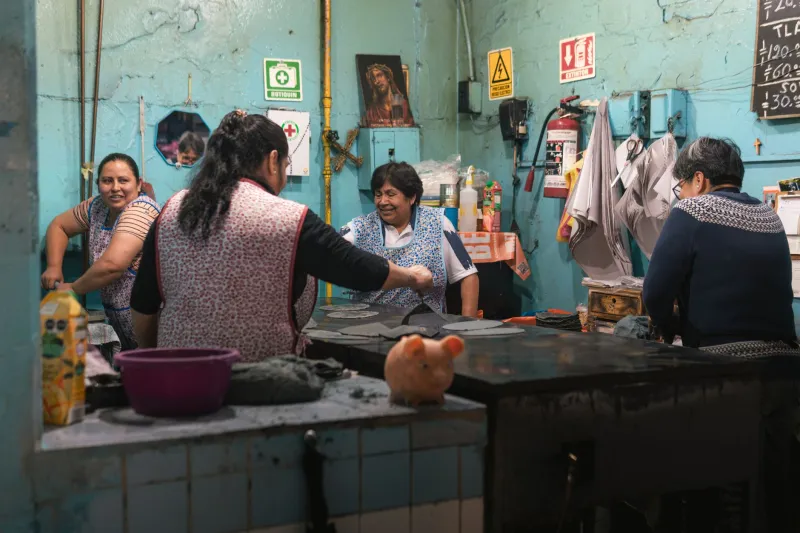
Community-led programs tend to disrupt this dynamic because they do not position participants as recipients. They position them as members, contributors, and decision-makers. A resident who helped design the program, who serves on its steering committee, who recruited her neighbor to participate—that resident is not receiving charity. She is exercising agency within a structure she helped build.
This is not merely a philosophical distinction. It produces measurably different behavioral outcomes, including higher retention rates, greater willingness to access wraparound services, and stronger reported sense of self-efficacy among participants.
What Institutions Can Learn—and Unlearn
For established food assistance organizations genuinely committed to improving outcomes, the evidence from community-led models carries clear implications. The challenge is that those implications require a willingness to redistribute power—which is, in practice, considerably more difficult than redistributing food.
Participatory budgeting offers one concrete mechanism. Several food programs across the country have experimented with allocating a portion of their operational budget to decisions made directly by program participants—what to stock, what services to offer, how to allocate volunteer hours. The results have been consistently positive, not only in terms of participant satisfaction but in operational efficiency: communities tend to allocate resources toward what they actually need, reducing waste and duplication.
Community advisory boards, when given genuine authority rather than merely consultative status, represent another avenue. The distinction between a board that approves decisions and one that makes them is significant—and most participants can tell the difference immediately.
At Bhandara Community Hub, our foundational commitment is to the principle that communities are not problems to be solved but capacities to be supported. The bhandara tradition does not position those who prepare the meal as superior to those who receive it. Everyone who gathers belongs equally to the occasion. That ethic—of radical welcome and shared dignity—is the standard against which all food assistance efforts should be measured.
Shifting the Question
The food insecurity crisis in America is real, persistent, and demands urgent response. But urgency should not be confused with the reflexive deployment of existing models. The more pressing question is not "how do we get more food to more people?" but "how do we build systems in which communities have the power, resources, and infrastructure to nourish themselves?"
Those are related questions, but they are not the same question. And the answer to the second one looks considerably different from anything currently at scale in American food policy.
The communities most affected by food insecurity are not waiting for permission to begin answering it. They are already doing so—in cooperative groceries, mutual aid networks, community-controlled growing spaces, and participatory meal programs across this country. The task for institutions, funders, and policymakers is not to lead that movement.
It is to follow it.