Familiar Faces, Lasting Change: Why Trusted Messengers Are the True Gatekeepers of Food Security
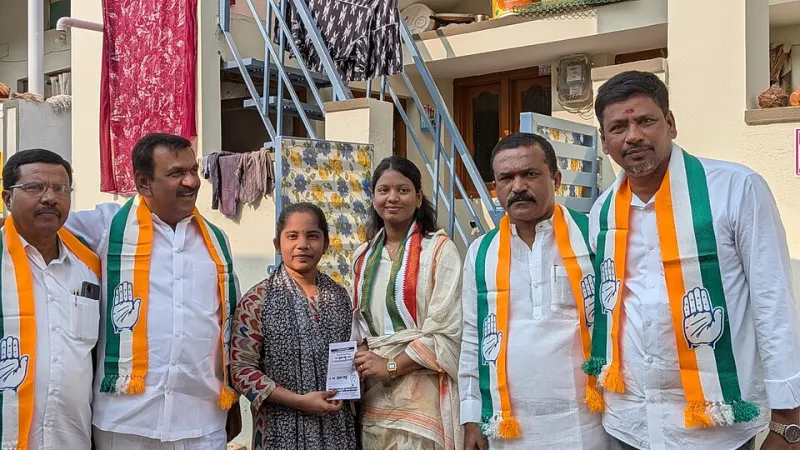
Photo: Gollaravikumaryadhav1971, CC0, via Wikimedia Commons
America spends billions of dollars annually on food assistance infrastructure. Warehouses are stocked. Hotlines are staffed. Websites are built and translated into multiple languages. And yet, in neighborhood after neighborhood, the people who need help most are the last to arrive at the door—if they arrive at all.
The gap between available resources and actual utilization is one of the most persistent and least discussed failures in the American social safety net. And increasingly, community organizers, public health researchers, and frontline workers are pointing to the same root cause: the absence of trust.
The Bureaucracy Problem Isn't Just Paperwork
When we talk about barriers to food assistance, the conversation tends to focus on logistics—transportation gaps, confusing eligibility requirements, limited hours of operation. These obstacles are real and deserve serious attention. But they are often symptoms of a deeper problem: the institutions delivering services have not invested in the relationships that make those services accessible in the first place.
Consider what it takes for a first-generation immigrant family, a recently released formerly incarcerated person, or an elderly resident living alone to walk into an unfamiliar building and ask for food. The act requires navigating not just paperwork but profound personal vulnerability. It demands a willingness to be seen in a moment of need by strangers operating within systems that may have historically excluded, surveilled, or penalized people who look like them.
For many Americans, especially those from communities with long memories of institutional harm, no amount of signage or outreach flyers can substitute for the assurance of a familiar face.
What Trusted Messengers Actually Do
The concept of the trusted messenger is not new to public health. Vaccination campaigns, HIV prevention efforts, and maternal health initiatives have long relied on community health workers—people who live within the communities they serve and carry the credibility that no external organization can manufacture overnight.
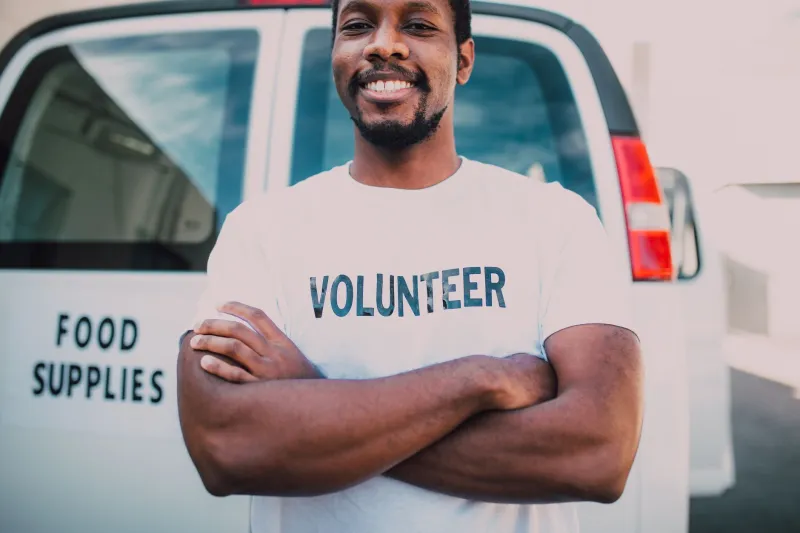
Food security outreach is beginning to catch up. In cities across the country, community organizations are embedding navigators inside barbershops, churches, laundromats, and corner stores—the informal gathering places where trust already exists. These individuals are not simply handing out pamphlets. They are having real conversations, answering hard questions, and accompanying people through intake processes that would otherwise feel impenetrable.
The difference in outcomes is striking. Programs that deploy community-embedded navigators consistently report higher rates of enrollment, greater retention, and stronger long-term engagement than those relying solely on centralized outreach. The data, in this case, confirms what common sense has long suggested: people follow people they know.
The Limits of Good Intentions
Well-meaning organizations often underestimate how much credibility must be earned before it can be used. A new food pantry that opens in a neighborhood without first consulting residents, hiring locally, or partnering with established community anchors may find itself operating at half capacity—not because the need isn't there, but because the community has no reason yet to believe this institution is different from the ones that have let them down before.
This pattern plays out repeatedly in under-resourced communities. External organizations arrive with resources and enthusiasm, design programs around their own assumptions about what the community needs, and then express frustration when uptake is low. The failure is rarely one of effort. It is almost always one of relationship.
Building authentic credibility requires time, humility, and a genuine willingness to be led by the people you hope to serve. It means showing up before the crisis, not just during it. It means hiring from within the community, compensating people fairly for their knowledge and labor, and being accountable when things go wrong.
Social Networks as Infrastructure
One of the most important reframes in community food work is recognizing that social networks are not a soft complement to formal infrastructure—they are infrastructure. The informal webs of relationship that connect neighbors, families, faith communities, and mutual aid groups are the actual channels through which information, resources, and trust flow in under-resourced communities.
When organizations learn to work with these networks rather than around them, the results are transformative. A grandmother who tells her church group about a new food resource reaches ten families in a single conversation. A trusted coach at a community center who mentions a meal program to a struggling parent plants a seed that may take weeks to bloom but does not require the parent to trust a stranger. These connections are not incidental. They are the mechanism.
Programs that map and engage existing social networks—rather than trying to build parallel systems from scratch—consistently achieve greater reach with fewer resources. The logic is straightforward: you do not need to create trust where it already exists. You need to earn the right to be part of it.
Dignity at the Center
Underlying the trusted messenger model is a principle that resonates deeply with the values that animate community-centered food work: the belief that people are not problems to be solved but agents of their own lives who deserve to be met with respect.
When someone who shares your background, speaks your language, and understands the specific pressures of your daily life reaches out to offer support, the interaction carries a fundamentally different quality than a cold referral from a government website. It communicates something beyond the availability of resources. It communicates: you are seen, you are valued, and you are not alone in this.
That experience of being genuinely recognized is not a luxury feature of effective outreach. It is often the deciding factor in whether someone accepts help at all.
Building Bridges That Last
For community organizations committed to closing the gap between available resources and actual need, the path forward is clear even if it is not easy. It requires investing in relationships before the moment of crisis. It requires hiring and compensating community members as full partners rather than volunteers or low-cost labor. It requires patience with a process that cannot be rushed and humility about the limits of external expertise.
It also requires listening—genuinely, consistently, and without the predetermined agenda that so often shapes how institutions engage with the communities they claim to serve.
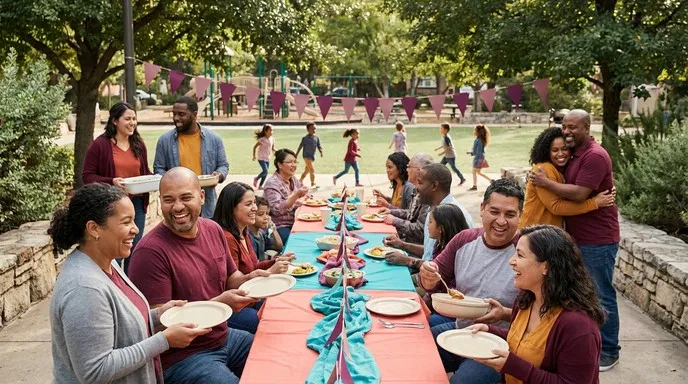
The bhandara tradition, which has long embodied the principle of unconditional nourishment offered without hierarchy or condition, offers a useful frame here. The table set for everyone is not simply a logistical achievement. It is a relational one. It is the product of a community that has decided, collectively, that no one will be left to navigate hunger alone.
Building that kind of community in the American context requires exactly what it has always required: the willingness to show up, to be known, and to trust that relationships, tended carefully over time, are the most durable infrastructure we have.