Everyone Brings Something to the Table: How Reciprocal Meal Networks Are Rewriting the Rules of Food Security
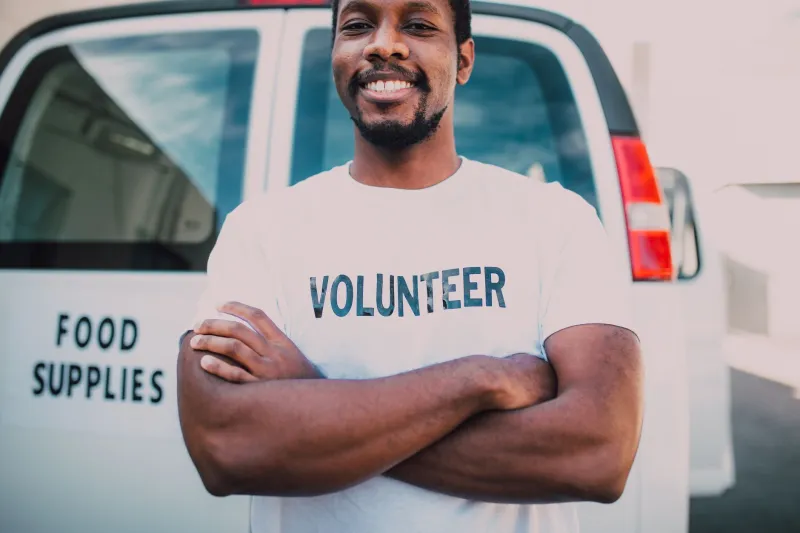
For decades, the dominant framework for addressing food insecurity in America has followed a familiar script: those who have give to those who do not. Food banks collect. Volunteers sort. Recipients receive. While this model has undeniably sustained millions of families through difficult seasons, it carries within it an inherent asymmetry — one that, for many people, quietly erodes the very dignity that nourishment is meant to support.
A growing number of communities across the country are experimenting with a fundamentally different approach. Rather than organizing around scarcity and need, they are organizing around abundance and reciprocity. The model is sometimes called a rotating meal collective, a community supper circle, or simply a neighborhood table network. Whatever the name, the underlying principle is consistent: every participant is both a contributor and a recipient, and the roles rotate.
The results are challenging long-held assumptions about what food security actually requires.
The Problem With One-Way Giving
To understand why reciprocal meal networks are gaining traction, it helps to examine what conventional food assistance programs — however well-intentioned — often get wrong.
Research consistently shows that the experience of receiving charitable food assistance carries significant psychological costs. Studies published in journals focused on social welfare and public health have documented elevated rates of shame, social withdrawal, and diminished self-efficacy among individuals who rely on food banks or pantries over extended periods. Many people who qualify for assistance choose not to access it, citing embarrassment or a reluctance to be perceived as dependent.
This is not a flaw in the character of recipients. It is a predictable human response to structural imbalance. When one party consistently gives and another consistently receives, the relationship itself communicates something about relative worth — regardless of the intentions involved.
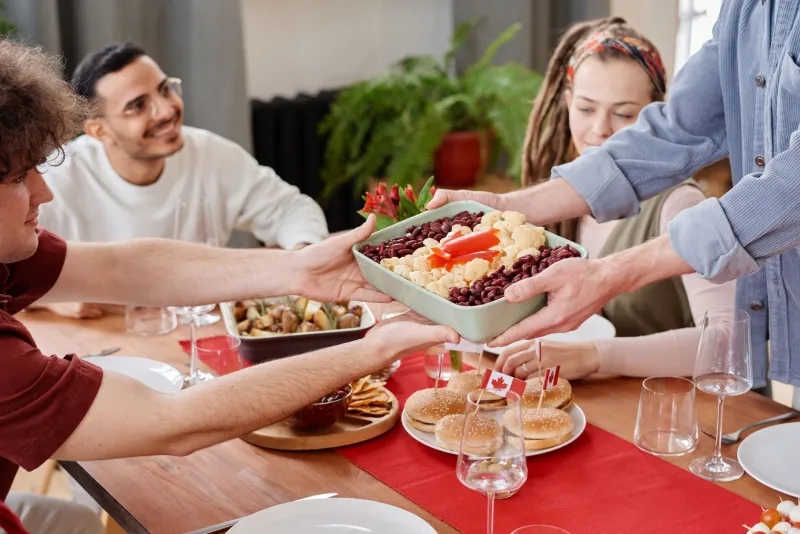
Reciprocal meal networks disrupt this dynamic at its root by ensuring that no one occupies a fixed role. The family that hosts dinner this week becomes a guest the following week. The neighbor who contributes a dish today is nourished by someone else's contribution tomorrow. The relationship is circular rather than directional, and that distinction matters enormously.
How Rotating Meal Collectives Work in Practice
The operational structure of these networks varies considerably depending on community size, geography, and cultural context, but several core features tend to appear across successful models.
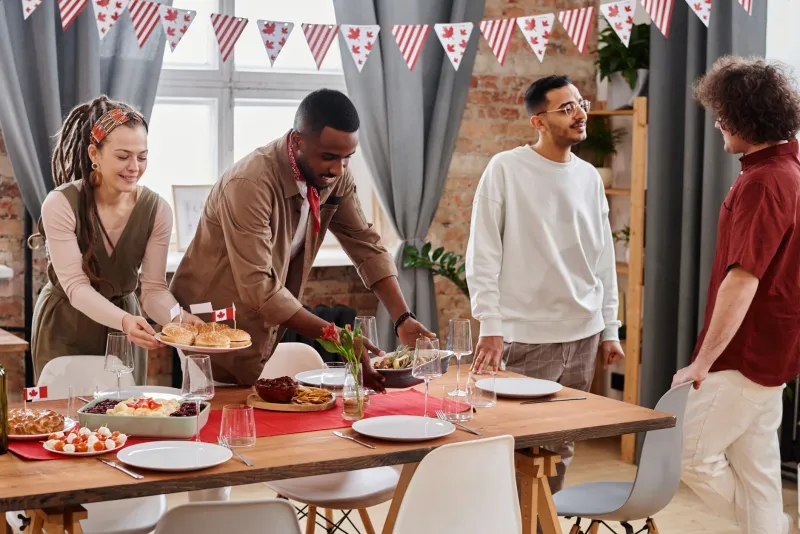
In Portland, Oregon, a neighborhood collective known informally as the Eastside Supper Circle has operated for several years with a membership of approximately forty households. Families sign up to host a communal meal on a rotating basis, typically once every six to eight weeks. The host provides the primary dish and the gathering space; other members bring supplementary items — bread, salads, desserts, or beverages — according to their means and capacity. No one is asked to disclose income or need. Participation itself is the only credential required.
Organizers of the Eastside Supper Circle report that the network has become a primary source of nutritious meals for several member families experiencing financial hardship, while those same families also serve as hosts when their circumstances allow. The reciprocity is not always perfectly balanced in economic terms — nor is it expected to be. What matters is that every member has a recognized role as a contributor.
A similar model has taken root in rural Appalachia, where geographic isolation compounds food insecurity in ways that urban pantry networks are poorly equipped to address. In several counties across eastern Kentucky and western North Carolina, small clusters of households have organized rotating potluck suppers that function as both a social anchor and a practical food resource. Participants report that the meals provide not only nutrition but also the kind of consistent human connection that is frequently absent in sparsely populated areas.
In urban contexts, the model adapts to different constraints. In Chicago's South Side, a collective organized through a local community center operates on a modified schedule, with members contributing prepared dishes to a shared weekly meal rather than hosting in private homes. The collective has deliberately structured itself to welcome participants across a wide range of cooking skill levels, explicitly communicating that a simple pot of rice or a bag of apples constitutes a meaningful contribution.
Dignity as a Design Principle
What distinguishes these networks from more conventional meal programs is not merely their structure but their underlying philosophy. Reciprocal meal collectives are built on the premise that every person possesses something of value to offer — whether that is culinary skill, physical space, time, or simply the willingness to show up and share a table.
This philosophy aligns closely with the values that animate Bhandara Community Hub's own mission. The ancient tradition of bhandara — the communal feast offered freely and without distinction — has always recognized that the act of giving and the act of receiving are not opposites but complements. A table at which everyone contributes honors the full humanity of every person seated at it.
Community organizers working in this space frequently emphasize that the design of a program communicates a message before a single meal is served. A program that asks participants to prove their need sends one message. A program that asks participants to bring what they can sends another entirely.
Building Social Infrastructure, Not Just Feeding People
Perhaps the most significant — and least anticipated — outcome of rotating meal collectives is what they build beyond the meals themselves.
Participants in networks across multiple regions consistently report deepened relationships with neighbors they previously knew only in passing. They describe a heightened sense of mutual obligation and community investment. Several collectives have evolved organically into broader mutual aid networks, with members supporting one another through job transitions, childcare arrangements, transportation needs, and household repairs.
This is not a coincidence. Regular shared meals create the conditions for trust to develop, and trust is the foundational currency of genuine community resilience. Food security, in this context, becomes less a matter of having enough calories available and more a matter of being embedded in relationships that ensure no one faces scarcity alone.
Public health researchers have begun to take notice. Emerging literature on social determinants of health increasingly points to social connectedness as a variable with measurable effects on nutritional outcomes, mental health, and long-term wellbeing. Reciprocal meal networks, by design, address multiple determinants simultaneously.
Scaling Without Losing the Spirit
One legitimate question facing advocates of this model is whether it can scale without losing the relational qualities that make it effective. Large, institutionalized programs risk reintroducing the very hierarchies that smaller networks are designed to avoid.
Experienced organizers suggest that the answer lies not in scaling individual networks upward but in proliferating smaller networks laterally — seeding new collectives in new neighborhoods rather than expanding existing ones beyond the point at which personal relationships remain possible. Several regional networks have adopted this approach, providing training and light coordination support to emerging neighborhood groups while preserving each collective's autonomy and local character.
Funding, too, requires careful stewardship. Organizers caution that external grant structures can inadvertently reshape programs in ways that reintroduce transactional dynamics. The most durable collectives tend to be those that remain primarily self-sustaining, with outside resources used to reduce barriers to participation rather than to professionalize the model.
An Invitation, Not a Handout
The potluck, in its most elemental form, is one of humanity's oldest technologies for building community. It asks nothing more than that each person bring what they have and share it openly. In that simplicity lies a profound statement about human equality and interdependence.
As communities across the United States continue to grapple with persistent food insecurity, the reciprocal meal network offers a compelling reminder that the most sustainable solutions are often those that begin not with a donation but with an invitation — one extended equally to everyone, with a place set at the table for all.