Between the Saffron and the Sale: How Immigrant Spice Vendors Are Teaching America to Eat With Intention
A Different Kind of Classroom
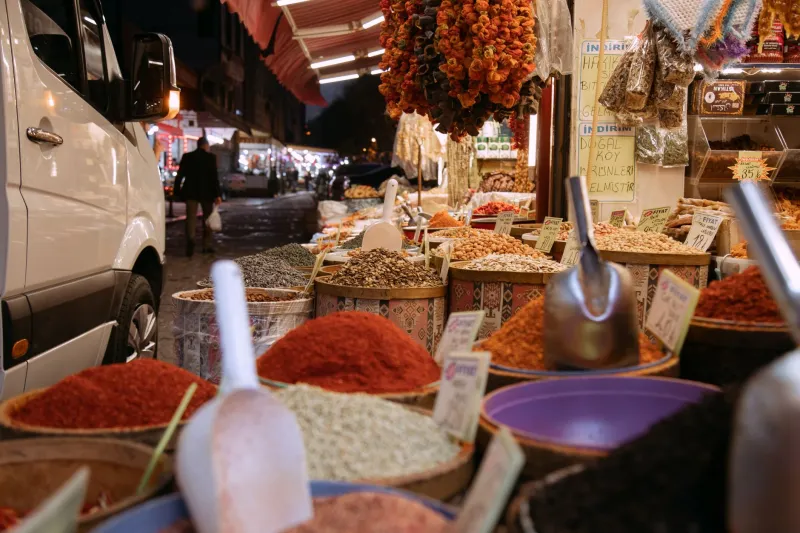
There are no whiteboards in Fatima Al-Rashid's stall at the Eastern Market in Detroit. No laminated handouts on fiber content or glycemic index. What there is, on any given Saturday morning, is a line of customers—longtime Yemeni neighbors, curious college students, elderly Haitian women, and second-generation Arab Americans—all waiting not just to buy fenugreek or dried limes, but to talk.
Fatima has been selling spices and dried herbs for eleven years. In that time, she has become something the formal food system rarely produces: a trusted, accessible, culturally fluent educator who meets people exactly where they are. Her classroom is the market stall. Her curriculum is the everyday act of feeding a family well.
Across the United States, in urban markets, ethnic grocery corridors, and neighborhood produce stands, this kind of informal education is happening constantly—and largely uncounted.
What a Vendor Knows That a Nutritionist Often Doesn't
Formal nutrition education in America tends to operate from a deficit model. It identifies what people lack—iron, calcium, dietary diversity—and prescribes solutions, often without accounting for the cultural, economic, or linguistic realities of the people it intends to serve. The result is guidance that is technically correct but practically distant.
Immigrant food vendors occupy a fundamentally different position. They are embedded in the communities they serve. They share languages, memories, and sometimes ZIP codes with their customers. When a Guatemalan produce vendor in Chicago's Pilsen neighborhood explains to a customer how to use chayote squash in a budget-friendly stew, she is not delivering a public health message. She is continuing a conversation that began with her grandmother.
This kind of knowledge transfer carries a weight that a brochure cannot replicate. It is specific, contextual, and grounded in lived experience. It also tends to be genuinely affordable. Vendors who understand their customers' economic constraints naturally point toward ingredients that are nutritious, versatile, and inexpensive—a form of practical food literacy that formal programs rarely achieve with the same fluency.
Bridging Language, Building Trust
For many immigrant families, language remains one of the most persistent barriers to navigating American food systems. Grocery store signage, nutrition labels, and SNAP enrollment materials are overwhelmingly available only in English, leaving millions of households to make critical decisions with incomplete information.
At the street market level, this gap closes quickly. A Bengali spice merchant in Jackson Heights, Queens, can explain the difference between two varieties of mustard seed in three languages before the next customer steps forward. A Vietnamese herb vendor in New Orleans' Gretna neighborhood knows which customers are managing diabetes and which are cooking for young children, and she adjusts her suggestions accordingly.
This linguistic and cultural fluency is not incidental. It is the foundation upon which real food education is built. Trust, after all, is a prerequisite for learning. People do not take advice from institutions they do not understand, and they do not seek guidance from sources that make them feel surveilled or judged. The vendor who has sold turmeric to the same family for a decade has earned a form of credibility that no government program can manufacture.
Anchors in the Neighborhood Food Ecosystem
Beyond their educational function, immigrant food vendors serve a structural role in neighborhood food access that is frequently overlooked in policy discussions. In many communities—particularly those that have experienced grocery store closures or have never attracted large retail chains—small ethnic vendors are the primary source of fresh, culturally appropriate food.
Their presence is not simply commercial. It is civic. The spice merchant who opens her stall three mornings a week is also providing a gathering point, a place where information circulates and community cohesion is quietly reinforced. When she teaches a neighbor how to make a nourishing broth from bones and aromatics, she is also demonstrating that eating well does not require a Whole Foods within driving distance.
Organizations working in community food development have begun to recognize this. Several food justice initiatives across the country—in cities including Minneapolis, Houston, and Philadelphia—have started partnering with immigrant vendors to formalize their educational role, offering small grants, market access support, and connections to nutrition organizations. These partnerships treat vendors not as recipients of institutional support, but as genuine collaborators with expertise worth investing in.
The Economics of the Stall
It would be incomplete to celebrate the educational contributions of immigrant food vendors without acknowledging the precarity that defines their working lives. Many operate without stable market access, facing permit costs, seasonal restrictions, and competition from larger retailers who benefit from subsidies and infrastructure that small vendors cannot access.
For immigrant women vendors in particular—who represent a significant portion of the spice and specialty food market—the challenges compound. Language barriers, limited credit histories, and the absence of networks that connect vendors to institutional buyers all constrain what is possible. The knowledge these women carry is extraordinary. The conditions under which they are asked to share it are often unjust.
Community organizations and municipal food policy bodies have a responsibility to address this imbalance. Supporting immigrant vendors through accessible permitting, multilingual business development services, and intentional inclusion in public market planning is not charity. It is an investment in the informal infrastructure that keeps neighborhoods nourished.
Reclaiming Agency Through the Everyday
At its core, what immigrant spice traders and specialty food vendors offer is something the formal food system has consistently struggled to provide: a pathway for communities to reclaim agency over what they eat. Not through programs designed for them, but through relationships built with them.
When a customer leaves a market stall with a bag of dried chilies, a new understanding of how to use them, and the confidence that the person who sold them cares about the outcome, something meaningful has occurred. A transaction has become an education. A sale has become a form of solidarity.
For those of us committed to building food systems that genuinely nourish communities, the lesson is clear. The most powerful educators are often already present in our neighborhoods, working long hours behind modest stalls, carrying knowledge that policy documents rarely capture and funding streams rarely reach. The task is not to create new programs to replace them. It is to recognize, support, and learn from what they are already doing.