Who Brings the Meal When You Can't Leave Home? The Rise of Last-Mile Food Networks
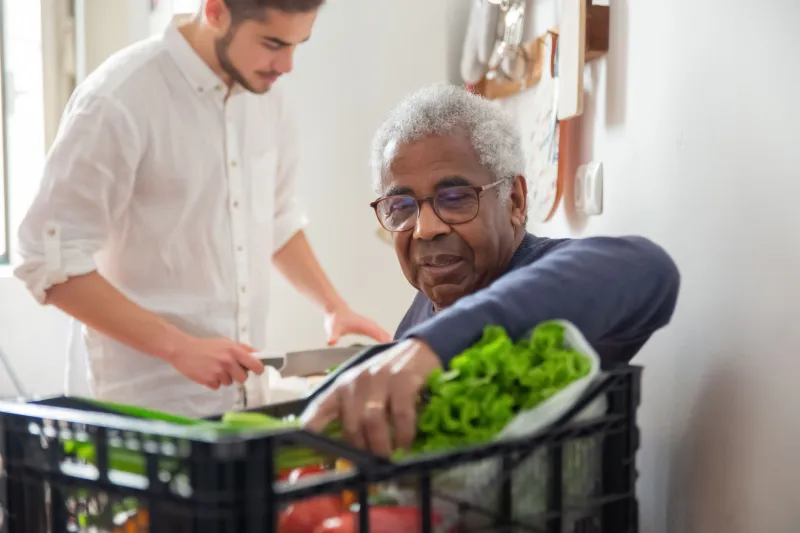
The American food banking system is, by most measures, a marvel of logistics. Millions of pounds of surplus food move through regional hubs, satellite pantries, and church basements every week. Yet for a growing share of the population—seniors aging in place, people with disabilities, parents without reliable transportation—the system has a stubborn flaw: it assumes they can show up.
The Gap No One Funded
Advocates call it the last mile problem, a term borrowed from telecommunications and disaster relief. The food exists. The pantry exists. But between the two sits a distance that millions of Americans cannot cross. Roughly a third of food-insecure households report that lack of transportation is a barrier to getting groceries, and for homebound seniors, the figure climbs even higher.
This is not a failure of generosity. It is a failure of distribution design—and it is being patched, neighborhood by neighborhood, by volunteers with sedans, minivans, and a spreadsheet.
Learning From Mutual Aid's Improvised Year
The pandemic-era mutual aid networks that sprang up in 2020 were widely described as temporary. Many were not. In cities like Philadelphia, Detroit, and Albuquerque, the ad hoc groups that once texted grocery lists to neighbors have formalized into standing organizations with intake forms, route maps, and recurring volunteer schedules. What began as emergency response has hardened into something resembling infrastructure—informal, unpaid, and remarkably durable.
Some of these groups borrow deliberately from the gig economy. Routes are optimized the way a delivery app might optimize them. Others borrow from disaster relief: pre-positioned supply caches, check-in protocols, redundancy in case a driver cancels. The result is a hybrid model that neither the public sector nor the private sector has produced on its own.
Why the Informal System Works
There is a temptation to see volunteer delivery as a stopgap awaiting professionalization. The people doing the work largely disagree. A volunteer who knocks on a door once a week is also a wellness check, a conversation, an early warning system for a fall or an empty refrigerator. Meal-delivery programs have long understood that the food is only half the service; the other half is being seen.
That relational component is precisely what large institutions struggle to replicate. A regional food bank cannot know that Mrs. Alvarez on Route 4 has stopped answering her door. A neighbor can.
The Limits—and the Case for Partnership
None of this is an argument that volunteer networks can replace public systems. Volunteer capacity is fragile, dependent on gas money, spare time, and goodwill that can evaporate after a hard winter. Several groups interviewed for this reporting described burnout as their most persistent threat.
The more promising path is partnership. Some county health departments now share data with mutual aid groups—without paperwork burdens—so that discharged patients who cannot shop are referred to a delivery route. A few food banks have begun treating volunteer drivers as an extension of their distribution arms, supplying the food while neighbors supply the miles.
Building the Last Mile Into the System
If there is a lesson for policymakers, it is that the last mile deserves to be treated as core infrastructure rather than an afterthought. Modest investments—stipends for volunteer drivers, insurance coverage, coordination software—would multiply the reach of networks that already exist and already work.
The shelves are stocked. The trucks are loaded. What remains is the shortest, hardest, most human stretch of the journey: the final doorbell. Increasingly, it is being rung by someone who lives around the corner.