From Kitchen to Career: How Culinary Training Programs Are Rewriting the Rules of Economic Mobility

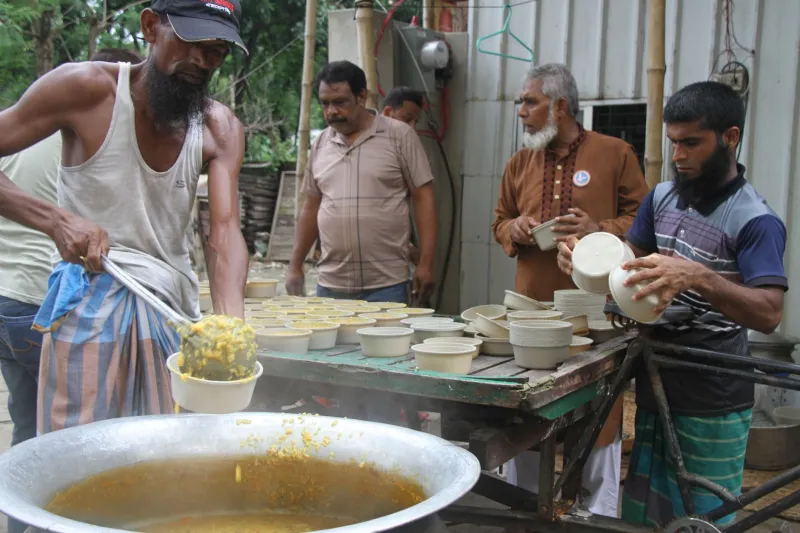
Photo by Photo by Ahmet Safa Türkyılmaz on Unsplash on Unsplash
The Limits of the Traditional Job Training Model
For decades, workforce development in low-income American communities has followed a recognizable script. Participants enroll in a training program. They acquire a credential. They are placed, or attempt to find placement, in an entry-level position in a field that promises advancement. The outcomes, measured against the investment, have been persistently modest.
The reasons for this modest performance are not difficult to identify. Many traditional job training programs prepare workers for industries that do not value them—sectors where wages stagnate, scheduling is erratic, benefits are nonexistent, and the ladder of advancement is effectively blocked. The training may be competent. The labor market into which it deposits workers is frequently hostile.
A growing number of community organizations across the United States are experimenting with a fundamentally different premise: rather than preparing marginalized workers for existing jobs in indifferent industries, they are building new economic structures—worker-owned catering cooperatives, community commissary kitchens, food entrepreneurship incubators—that give participants ownership stakes in the enterprises they help create.
The skill at the center of these models is cooking. And the results are beginning to attract serious attention.
Why Food Skills Are Different
Culinary ability occupies a distinctive position in the landscape of workforce skills. It is, first, genuinely universal—every culture on earth has a food tradition, and the depth of cooking knowledge embedded in immigrant communities and communities of color in the United States represents an enormous, largely untapped economic asset.
It is also scalable. The same competencies that allow a person to cook for their family can, with appropriate business training and infrastructure, support a catering operation, a food truck, a cottage food business, or a seat in a restaurant kitchen. The path from skill to income is relatively direct compared to many other trades.
Perhaps most importantly, food-based economic activity directly addresses food access in the communities where it operates. A catering cooperative that employs formerly incarcerated women is also, in many cases, providing affordable prepared meals to community events. A culinary apprenticeship program that trains young adults from food-insecure households is also staffing a community café that serves affordable lunches in a neighborhood with few dining options. The economic development and the food security work are not parallel tracks—they are the same track.
Profiles in Practice
The organizations doing this work are diverse in structure and geography, but they share a common architecture: training that is rigorous, support that extends beyond the classroom, and an economic model that gives participants a meaningful stake in outcomes.
In New Orleans, a culinary cooperative called Café Reconcile has operated for more than two decades, training young adults from high-poverty neighborhoods in professional cooking and hospitality skills while running a full-service restaurant open to the public. Graduates have gone on to careers in the city's celebrated restaurant industry, but a growing number have launched their own food businesses—catering operations, pop-up restaurants, and food truck ventures that keep economic activity within the community.
In Chicago, the Inspiration Kitchens model—which combines culinary job training with community café operations—has demonstrated that food-based workforce programs can achieve employment placement rates significantly above national averages for comparable populations, while simultaneously providing affordable meals in neighborhoods where food options are limited.
In Oakland, California, La Cocina has spent nearly two decades incubating food businesses founded by low-income women, the majority of them immigrants. The program provides commercial kitchen access, business development support, and pathways to brick-and-mortar storefronts. Alumni businesses have collectively generated tens of millions of dollars in revenue and created hundreds of jobs. Several have become neighborhood anchors—restaurants and market stalls that feed and employ the communities from which their founders came.
These are not isolated experiments. They represent a maturing model with documented outcomes.
The Cooperative Difference
Among the most promising structural innovations in food-based economic development is the worker-owned cooperative. In a standard culinary training program, participants acquire skills and seek employment in businesses owned by others. In a cooperative model, participants become co-owners of the enterprise itself—sharing in both the risks and the returns of the business they build together.
This structure matters for several reasons. It changes the relationship between worker and work. Cooperative members have a direct financial interest in the success of the enterprise, which research consistently associates with higher productivity, lower turnover, and greater job satisfaction. It also changes the distribution of economic returns—profits flow to workers rather than to external shareholders, keeping wealth within the community.
For communities where wealth extraction has been a defining economic experience—where payday lenders, absentee landlords, and low-wage employers have systematically redirected economic value away from residents—the cooperative model represents something genuinely different. It is not simply a better job. It is a different relationship to economic life.
Addressing Barriers That Other Models Ignore
Culinary workforce programs that are designed thoughtfully address barriers that traditional job training consistently overlooks.
Child care is one. Many of the adults most in need of economic mobility are also primary caregivers, and the scheduling demands of conventional job training programs make participation impossible for parents of young children. Several food-based programs have addressed this directly, offering on-site child care, flexible scheduling, or partnerships with community child care providers.
Transportation is another. Programs located in or near the communities they serve—rather than in distant commercial districts—reduce the logistical burden on participants who lack reliable access to vehicles or public transit.
Criminal record stigma is a third. The food industry has historically been more willing than many sectors to hire workers with prior convictions, and culinary training programs that work explicitly with formerly incarcerated individuals have found that food-based employment pathways are among the most accessible available to this population.
By designing around these barriers rather than expecting participants to overcome them independently, the best food-based workforce programs achieve participation and completion rates that conventional job training programs rarely match.
The Deeper Argument
There is a tendency in economic development discourse to treat job training as a technical intervention—a matter of matching skill supply to labor market demand. The food-based economic mobility model suggests a more ambitious frame.
When a woman who grew up food-insecure in a low-income neighborhood learns to turn her grandmother's recipes into a catering business, she is not simply acquiring a marketable skill. She is reclaiming an asset—cultural knowledge, culinary tradition, community relationship—that was always hers, and converting it into economic power. When a group of formerly incarcerated men form a food cooperative that supplies meals to community organizations, they are not simply finding employment. They are building an institution that serves their community while providing for themselves.
This is the promise at the heart of the food-as-economic-development model: that the skills, traditions, and relationships that low-income communities already possess are not deficits to be remediated but assets to be activated.
At Bhandara Community Hub, we believe that nourishing lives and strengthening communities are not separate missions. They are expressions of the same commitment. The kitchen that trains a worker, feeds a neighborhood, and builds an economy simultaneously is not doing three things. It is doing one thing, completely.