The Invisible Wall: How Shame and Stigma Keep Millions of Americans From Food They've Earned the Right to Receive

The application was only four pages long. For Maria, a home health aide in Cleveland, Ohio, those four pages sat on her kitchen counter for eleven months before she finally filled them out. She qualified for SNAP benefits — the Supplemental Nutrition Assistance Program — and had qualified for most of that year. Yet every time she reached for a pen, something stopped her. It was not confusion about the form. It was not a language barrier. It was the voice in her head, sharp and certain, telling her that accepting help meant she had failed.
"I kept thinking, I have a job. I should be able to feed my kids," she recalled. "I didn't want anyone to see me at the checkout with that card."
Maria's story is not unusual. According to the USDA, roughly one in four Americans eligible for SNAP does not participate. Among working-age adults without dependents, that participation gap is even wider. Across all federal food assistance programs — from WIC to school meal initiatives — researchers consistently find that stigma, not ignorance and not bureaucratic inaccessibility alone, is among the most powerful forces keeping people from help they have every right to receive.
A Burden Built Over Generations
The shame surrounding food assistance in America did not emerge overnight. It has been constructed methodically, through decades of political rhetoric that conflated poverty with personal failure, through media portrayals that caricatured assistance recipients, and through a cultural mythology that elevated self-sufficiency to near-sacred status.
Psychologists who study food insecurity describe what they call "internalized stigma" — a process by which individuals absorb society's negative judgments and apply them to themselves before anyone else has the chance to. This internal critic is often more punishing than any external judgment. People deny themselves meals, skip program enrollments, and sacrifice nutritional health not because others have shamed them directly, but because they anticipate the shame and preemptively retreat.
For communities of color, the stigma carries additional weight. Research published in the American Journal of Public Health has found that Black and Latino families report higher levels of food assistance stigma than white families, even when controlling for income levels. The intersection of racial stereotyping and welfare narratives creates a compounded burden — a fear not just of being seen as poor, but of confirming a harmful stereotype.
Immigrant communities face yet another layer of complexity. Since the introduction of the "public charge" rule — a federal policy that suggested use of public benefits could jeopardize immigration status — many eligible immigrant families, including U.S. citizen children, withdrew from food programs entirely. Although the rule was later rescinded, its chilling effect persists. Community health workers across cities like Los Angeles, Chicago, and Houston report that fear continues to keep immigrant households away from tables they have every legal right to approach.
What Stigma Costs Everyone
The consequences of unaddressed food stigma extend well beyond the individuals who go hungry. When families consistently undereat or rely on the cheapest available calories rather than seek assistance, the downstream costs fall on the entire community — in the form of higher rates of diet-related chronic illness, reduced cognitive development in children, diminished workforce productivity, and increased emergency medical expenditure.
A study by the Urban Institute estimated that for every dollar invested in SNAP, approximately $1.50 to $1.80 is generated in local economic activity. When stigma suppresses participation, communities lose not only human health but economic vitality. The invisible wall, it turns out, has a very visible price tag.
Children bear a particular burden. School nutrition programs — including free and reduced-price lunch — are among the most effective tools available for addressing childhood hunger. Yet participation rates remain below potential in many districts, in part because children themselves internalize the social dynamics of the cafeteria. Being identified as a recipient of free meals can invite peer judgment, leading some children to skip meals rather than face social consequences. The hunger is real. The silence around it is learned.
Communities Rewriting the Narrative
Across the country, community organizations are responding to this crisis not with louder advertising campaigns, but with a fundamental reframing of what food assistance means.
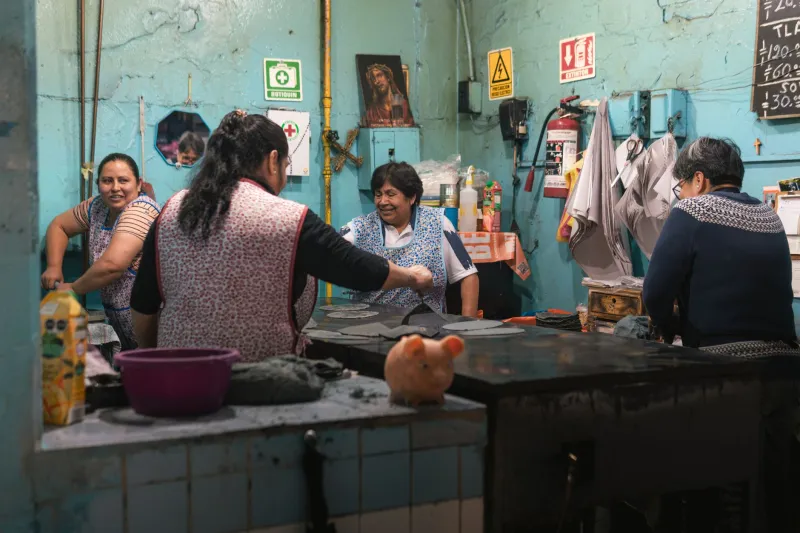
In Detroit, a network of neighborhood food hubs has replaced the language of "assistance" with the language of "community resource." Pantries are designed to feel like neighborhood markets, with open shelving, dignified choice, and no requirement to explain or justify need. Staff members are trained not as caseworkers but as community hosts — a distinction that may seem subtle but carries profound psychological weight for those walking through the door.
In rural Appalachia, faith communities have taken the lead in normalizing food access by integrating shared meals into regular community gatherings — removing the transactional dimension entirely. When everyone eats together, no one is singled out as a recipient.
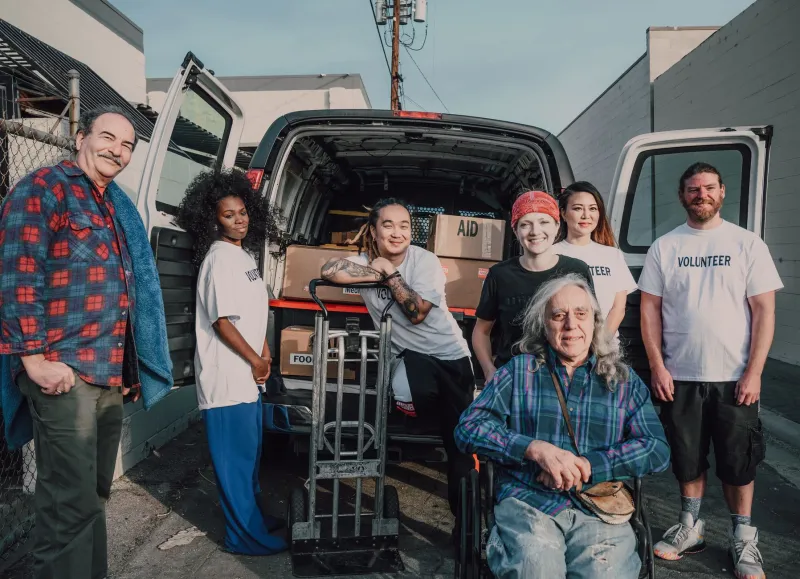
Community health workers — often called promotoras in Latino communities — have emerged as particularly effective bridges between eligible families and the programs they avoid. Because these workers are embedded in the communities they serve, sharing language, culture, and often personal experience with food insecurity, they are able to have conversations that no government brochure can replicate. They can say, with authority and without condescension: I have been there. This help is yours.
Organizations aligned with the values of the Bhandara tradition — the ancient practice of offering food to all, unconditionally and without hierarchy — have found particular resonance in this work. When food is offered as an expression of community solidarity rather than charitable condescension, the dynamic shifts. The recipient is not diminished. The giver is not elevated. Both are simply neighbors at the same table.
Reclaiming Dignity as a Right
The most transformative shift happening in food access advocacy today is a legal and moral one: the insistence that food is a right, not a reward for sufficient struggle.
Advocates are pushing for structural changes that reduce the administrative burden of accessing benefits — shorter applications, fewer documentation requirements, expanded online enrollment — while simultaneously working to change the cultural conversation. Anti-hunger coalitions in states including California, Minnesota, and New York have launched public campaigns that center the voices of people who have accessed food assistance, telling their stories not as narratives of shame overcome, but as straightforward accounts of a community resource utilized.
Maria eventually submitted her application. She describes the moment she used her benefits card for the first time as "terrifying, then nothing." No one stared. No one said a word. She bought groceries, went home, and made dinner for her children.
"I wasted almost a year being hungry because I was scared of what people would think," she said. "That time I can't get back. But I try not to be angry about it. I just try to tell other people: the help is there. You don't have to earn the right to eat."
That message — simple, human, and long overdue — is the foundation upon which communities can begin to dismantle the invisible wall. Not with policy alone, but with the radical act of telling the truth: that hunger is not a personal failing, and that a community that feeds its members without condition is not a weaker community. It is a stronger one.
Bhandara Community Hub is committed to advocating for dignified, equitable access to food and community resources across America. If you or someone you know needs help finding local food assistance, visit our resources directory or contact us directly.