Recipes Remembered, Futures Fed: The Rise of Intergenerational Cooking Programs Across America
When a Recipe Becomes a Bridge
There is a particular kind of knowledge that does not survive in cookbooks. It lives in the hands of a grandmother who measures flour by feel, in the patience of a grandfather who knows precisely when the oil is ready without consulting a thermometer, and in the stories exchanged while something simmers on the stove. For much of the past half-century, that knowledge has been quietly disappearing from American family life—lost not to catastrophe, but to convenience, distance, and the steady erosion of shared domestic time.
Now, a growing number of community organizations across the country are working deliberately to recover it. Through structured intergenerational cooking programs, they are creating spaces where older adults and young people prepare meals together, and in doing so, rebuild something far more significant than culinary competence.
The Scope of the Disconnection
To understand why these programs matter, it helps to appreciate how thoroughly American families have drifted from the practice of cooking together. Research from the USDA and various public health institutions consistently shows that the average American household spends far less time preparing food at home than it did in previous generations. Ultra-processed, ready-made meals have replaced scratch cooking in millions of homes. Children in many communities grow to adulthood without ever learning to dice a vegetable, read a recipe, or manage the basic chemistry of heat and seasoning.
This is not simply a lifestyle shift. It carries measurable consequences. Nutritional literacy—the practical understanding of how food choices affect health—is closely tied to cooking participation. Young people who never learn to cook are more dependent on commercial food systems, more vulnerable to diet-related illness, and less equipped to feed themselves and their families on limited budgets. The cycle tends to repeat itself across generations.
At the same time, older adults in many communities experience profound social isolation. The knowledge they carry—recipes, techniques, food traditions—goes unshared and, eventually, unremembered.
What Intergenerational Kitchens Actually Look Like
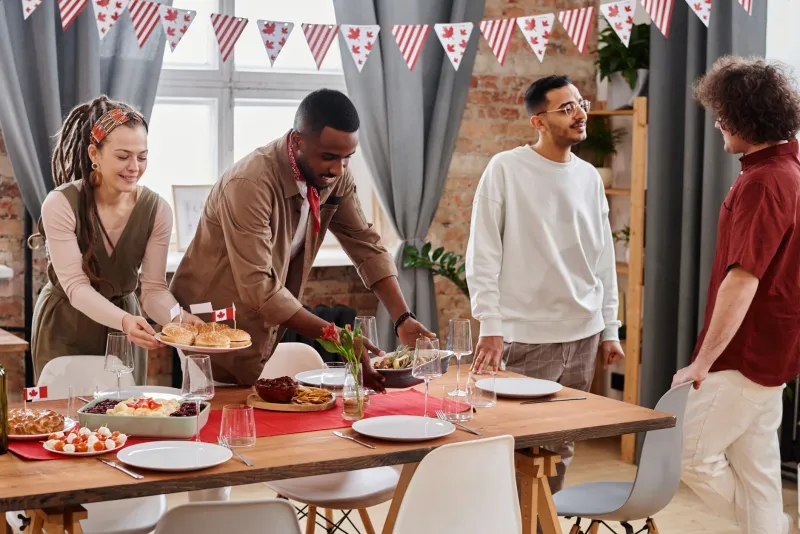
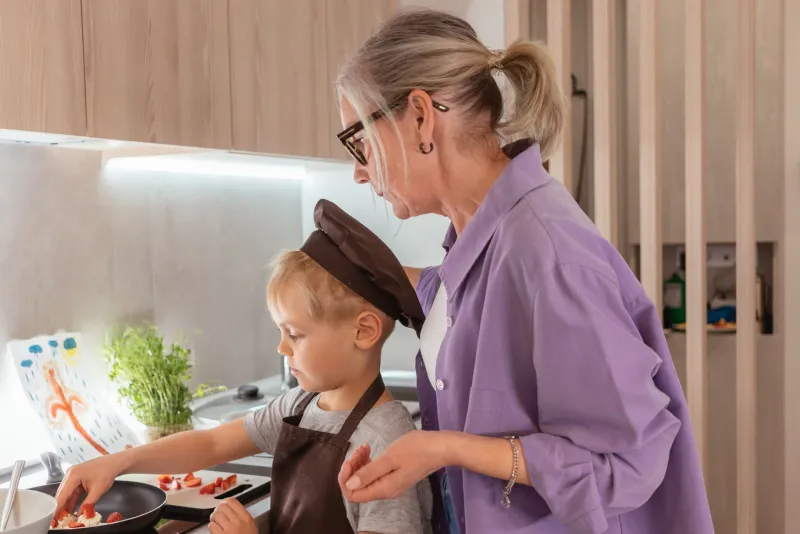
The model varies by organization, but the essential structure is consistent: older community members and younger participants—typically children or teenagers—are paired or grouped in a kitchen setting to prepare meals together. The older participants lead, sharing recipes and techniques. The younger ones learn by doing. Both generations, in the process, learn something about each other.
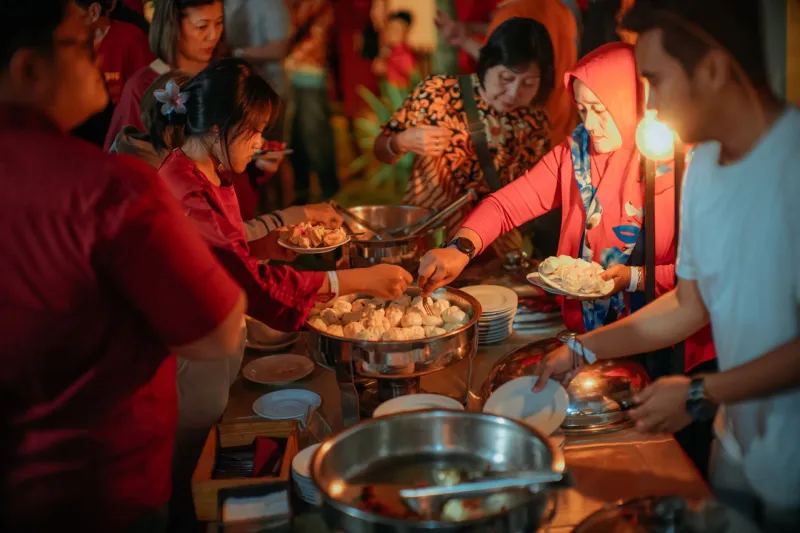
In Chicago, community centers affiliated with neighborhood development organizations have hosted weekly cooking sessions pairing senior residents with youth from local after-school programs. In rural Appalachia, extension offices have facilitated similar gatherings where grandparents teach traditional preservation techniques—canning, pickling, fermenting—to grandchildren who had never seen the process. In immigrant communities from California to New York, cultural organizations use the shared kitchen as a space for transmitting recipes that carry the memory of countries left behind.
Bhandara Community Hub's own mission—rooted in the tradition of nourishing lives through communal sharing—recognizes this dynamic intimately. The act of preparing food together is not incidental to community building. It is one of its most direct expressions.
The Psychological Dimension
Researchers who study intergenerational programs have documented benefits that extend well beyond cooking skill. For young participants, engagement with older mentors in a structured, collaborative activity is associated with improved self-esteem, greater respect for elders, and a stronger sense of cultural identity. For older adults, the experience of being recognized as a knowledge-holder—rather than a passive recipient of services—carries significant psychological weight.
Dr. Donna Butts, executive director of Generations United, a Washington, D.C.-based nonprofit, has long advocated for programs that bring age groups together around shared purpose. The kitchen, she and others have noted, is a particularly effective setting because the activity is tangible, the results are immediate, and the roles are clear. Everyone contributes. Everyone benefits from the outcome.
There is also something worth noting about the nature of culinary transmission specifically. Unlike many forms of instruction, cooking is learned through proximity and repetition rather than formal explanation. It requires presence. It rewards patience. These are qualities that the intergenerational kitchen naturally cultivates—in both directions.
Cultural Preservation as Community Resilience
For many communities, the recipes being passed down in these programs carry a significance that transcends nutrition. They are documents of cultural survival. A tamale recipe handed from a grandmother to her granddaughter in a Phoenix community center carries within it language, memory, and identity. A West African stew taught to a group of teenagers in a Minneapolis kitchen encodes agricultural knowledge, spice traditions, and a relationship to land that no written record fully captures.
This dimension of intergenerational cooking programs is increasingly recognized by public health professionals and community development practitioners alike. Cultural continuity—the sense of connection to one's heritage and community history—is a recognized social determinant of health. Communities with strong cultural cohesion tend to demonstrate greater resilience in the face of economic hardship, displacement, and institutional neglect.
When a community organization creates a space for these exchanges, it is doing more than teaching children to cook. It is actively preserving the living archive of a community's identity.
Practical Skills in an Uncertain Economy
The practical benefits deserve equal acknowledgment. In an era of rising food costs and persistent economic instability, the ability to prepare nutritious meals from basic ingredients is a genuine financial skill. Organizations that combine intergenerational cooking with budgeting education—teaching participants to plan meals, shop strategically, and minimize waste—equip families with tools that have direct and lasting impact on household food security.
Young people who leave these programs knowing how to prepare a week's worth of meals on a modest budget carry that capability into adulthood, into their own households, and eventually into the lives of their own children. The intergenerational kitchen, at its best, interrupts a cycle—not just of nutritional ignorance, but of economic vulnerability.
Building the Infrastructure for Connection
For community organizations seeking to develop or expand these programs, the infrastructure needs are relatively modest. A functional shared kitchen, consistent scheduling, and thoughtful facilitation are the primary requirements. The greater investment is in relationship-building: identifying older adults who are willing and able to participate as mentors, connecting with schools and youth-serving organizations to recruit younger participants, and creating an environment in which both generations feel genuinely valued.
Funding from community development block grants, local foundations, and public health departments has supported these programs in various cities. Advocacy for their expansion—on the basis of both health outcomes and community cohesion—is a legitimate and important use of civic energy.
A Table Worth Setting
The intergenerational kitchen is, in many respects, a microcosm of what healthy communities aspire to be: spaces where knowledge flows freely across age and experience, where shared purpose generates belonging, and where the act of nourishing one another is understood as both a practical necessity and a profound act of care.
In a country where so many forces work to fragment families and isolate individuals, the simple act of cooking together across generations carries an almost radical significance. It insists that what older people know is worth learning. It insists that young people are capable of more than passive consumption. And it insists that the table is still one of the most powerful places a community can gather.
That is a tradition worth protecting—and, where it has been lost, worth rebuilding.