When Did We Stop Knocking? Reclaiming the Lost American Tradition of Sharing Food Across the Fence
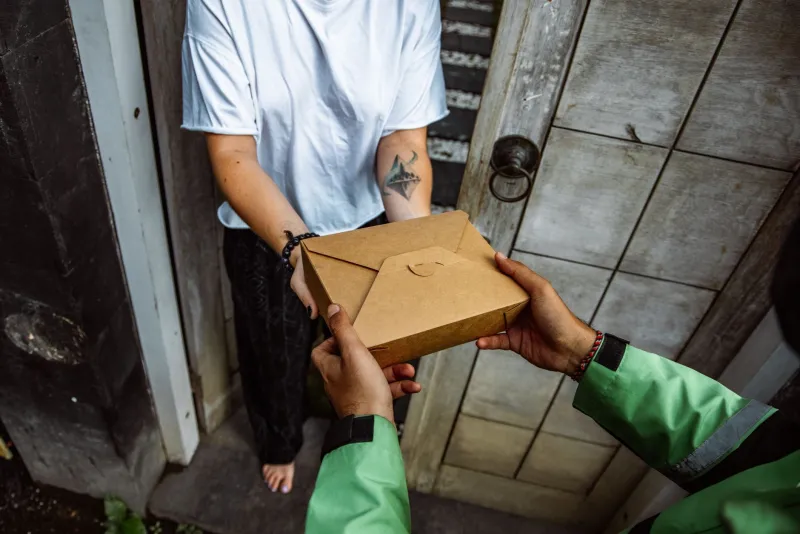
There was a time, not so long ago, when a neighbor arriving at your door with a pot of soup was considered ordinary. No occasion required. No formal invitation extended. Food moved between households with the ease of conversation, and in doing so, it quietly stitched neighborhoods into something more durable than a collection of addresses. That ease has largely vanished from American life—and its absence carries consequences that extend far beyond the dinner table.
At Bhandara Community Hub, our mission draws from a tradition in which food is understood as a vehicle for dignity, connection, and shared humanity. The ancient practice of bhandara—the communal feeding of all who arrive, without condition—reflects a truth that many Americans once practiced instinctively and have since forgotten: that sharing food with those around us is not charity. It is community.
The Slow Retreat From the Shared Table
The decline of informal food-sharing among neighbors did not happen overnight. Researchers and community organizers point to a constellation of forces that, over several decades, made the spontaneous exchange of food feel less natural and, in some cases, actively uncomfortable.
Suburbanization played an early role. As American neighborhoods were redesigned around the automobile rather than the pedestrian, physical proximity no longer translated into social closeness. Houses set back from streets, garage doors that open directly into homes, and backyards enclosed by privacy fencing all reduced the incidental encounters through which food exchange once flourished. You cannot offer a neighbor tomatoes from your garden if you never happen to see your neighbor.
Longer working hours further compressed the time available for the kind of casual hospitality that food-sharing requires. When both adults in a household work demanding schedules, the energy to prepare something extra—and the confidence that a neighbor will be home to receive it—diminishes considerably.
Perhaps most significantly, American culture gradually absorbed a set of anxieties around homemade food that would have seemed foreign to earlier generations. Concerns about allergens, dietary restrictions, and food safety—while legitimate in their origins—have, in some communities, calcified into a generalized wariness about accepting food prepared in someone else's kitchen. This wariness is not irrational, but it has had a chilling effect on the spontaneous generosity that once characterized neighborhood life.
The Psychological Distance Between Neighbors
Beyond logistics and culture, there is a psychological dimension to this retreat that deserves honest examination. Many Americans today report that they do not know their neighbors well enough to feel comfortable offering them food. This is not merely a statement about food—it is a statement about the depth of social connection available to people in their immediate surroundings.
Sociologists have documented a significant increase in what they term "neighbor strangers"—people who live within yards of one another for years without exchanging more than a wave. In this context, arriving at someone's door with a dish of food can feel presumptuous, or even intrusive, rather than warm. The gesture that was once universally understood as friendly now requires a social infrastructure—a baseline of familiarity—that many neighborhoods no longer possess.
This creates a paradox: food-sharing builds the kind of connection that makes food-sharing feel natural, but without that existing connection, the first offer feels awkward. Someone has to go first, and in communities where social trust has worn thin, no one wants to risk the discomfort of a misread gesture.
What Is Lost When Food Stops Moving
The consequences of this cultural shift are not trivial. Informal food exchange has historically served as one of the most effective and least bureaucratic forms of community safety net. When a family fell on hard times, neighbors noticed—not through formal reporting systems, but through the rhythms of daily proximity. A plate left at the door, a bag of groceries, a standing invitation to dinner: these were the mechanisms through which communities absorbed hardship before it became crisis.
That informal network has not been replaced by formal systems. Food banks and assistance programs serve an essential function, but they operate at a different register than neighbor-to-neighbor exchange. They require application, documentation, and the navigation of institutional processes. The neighbor who shows up with a casserole asks for none of that. The exchange is immediate, personal, and free of the stigma that continues to keep many food-insecure Americans from seeking formal help.
When the casual culture of food-sharing collapses, a gap opens between formal assistance and genuine need—a gap that is particularly acute for families who are struggling but do not yet identify themselves as people who need "food assistance." These households might readily accept a neighbor's surplus zucchini or a shared dinner, but would not walk through the door of a food pantry. The informal pathway has a reach that formal systems, by design, cannot fully replicate.
Rebuilding What Was Lost
The encouraging truth is that the tradition of food-sharing does not need to be invented from scratch—it needs to be reactivated. And communities across the United States are finding creative, low-pressure ways to do exactly that.
Neighborhood "free pantry" initiatives—small, publicly accessible shelves or boxes stocked with nonperishable goods and garden surplus—have taken root in hundreds of cities and towns. These structures lower the social stakes of both giving and receiving by removing the need for direct interaction. A neighbor can leave a bag of apples without knocking; another can take what they need without explanation. The exchange is dignified precisely because it is anonymous.
Some communities are reviving the potluck as a structured entry point. Block associations, faith communities, and neighborhood organizations are hosting regular shared meals not as charity events but as social occasions, deliberately designed to rebuild the baseline of familiarity that makes spontaneous food-sharing feel natural again. When you have sat at a table with your neighbors, offering them food later feels like a continuation of something already begun.
Community gardens, too, are proving to be powerful catalysts for food exchange. When neighbors grow food together, sharing the harvest becomes an extension of the shared labor. The garden creates the conditions—regular contact, common purpose, physical proximity—under which food moves between people as a matter of course.
An Invitation, Not an Obligation
Rebuilding a culture of food-sharing is not about pressuring anyone into a level of openness they do not feel. It is about creating the conditions under which generosity becomes easy, natural, and mutually reinforcing. It is about recognizing that the informal safety nets woven by neighbors who share food are not a quaint relic of a simpler era—they are a sophisticated and irreplaceable form of community resilience.
At Bhandara Community Hub, we believe that nourishing lives and strengthening communities are not separate goals. They are the same goal, expressed in different moments. Every time food crosses a property line between neighbors—whether it is a jar of homemade jam, a share of garden herbs, or a full meal left quietly at a door—that belief is enacted in the most tangible way possible.
The question of when Americans stopped knocking on their neighbors' doors with food in hand is worth asking. But the more urgent question is simpler: Who will knock first?