From Charity to Kinship: How Houses of Worship Are Rewriting the Rules of Food Aid
For decades, the image of faith-based food aid in America has been relatively consistent: a church basement, folding tables, volunteers in matching aprons, and a line of recipients waiting to receive what is given. The dynamic is familiar. It is also, many community leaders now argue, fundamentally limited.
Something different is happening in congregations across the country. From a Sikh gurdwara in Fresno to a Black Baptist church in Atlanta to a Muslim community center in Dearborn, faith communities are moving away from the conventional charity model and toward something more reciprocal, more relational, and more rooted in the spiritual traditions they claim to embody.
The Problem With the Pantry Model
Traditional food pantries, even those operated with genuine compassion, tend to reproduce a particular social arrangement: the helper and the helped, the giver and the receiver, the institution and the client. This arrangement is not without value. In moments of acute crisis, a well-organized distribution system can mean the difference between a family eating and going without.
But the pantry model has structural limitations that extend beyond logistics. When food assistance is organized around institutional authority—where decisions about what is distributed, when, and to whom are made by those who are not themselves food insecure—the people most affected by the system have the least influence over it. Their role is to receive, not to shape.
Faith leaders who have spent years running traditional food programs describe a growing awareness of this tension. "We were doing a lot," said one pastor at a congregation in Philadelphia that serves a predominantly low-income neighborhood. "But we weren't really doing it with people. We were doing it for them, and there's a difference that matters."
Mutual Aid as Theological Practice
The shift toward mutual aid is not, for many of these communities, primarily a strategic calculation. It is a theological one.
Virtually every major faith tradition carries within it some conception of collective responsibility for human welfare—a recognition that the flourishing of individuals is inseparable from the health of the community as a whole. In Islam, the concept of zakat frames charitable giving not as generosity but as obligation, a redistribution of resources that belongs, in part, to those in need. Jewish teaching on tzedakah similarly frames giving as justice rather than charity. In many Christian traditions, the early church's practice of holding resources in common is held up as a model for contemporary community life.
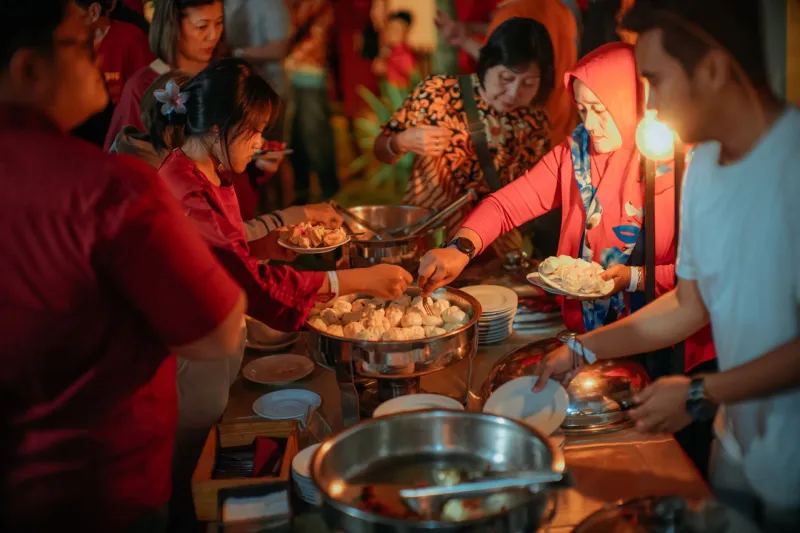
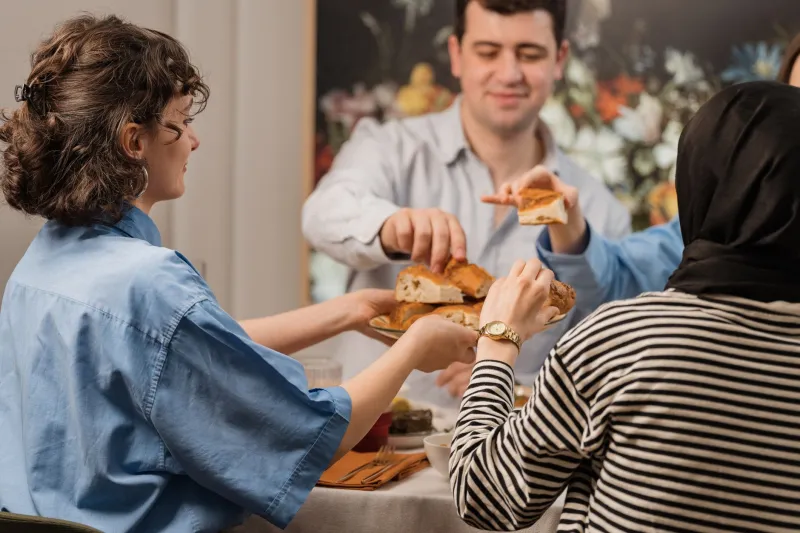
The Bhandara tradition, observed in Sikh communities and across various South Asian spiritual lineages, takes this logic perhaps furthest: food prepared communally and shared without condition, with no distinction made between giver and receiver at the moment of the meal. Everyone eats. Everyone serves. The roles are, at least in that moment, interchangeable.
For faith communities exploring mutual aid, these traditions provide both inspiration and legitimacy. The shift away from charity is not a departure from religious identity—it is, many leaders argue, a return to it.
Centering the Voices of Those Most Affected
The practical expression of this shift varies widely, but a common thread is the deliberate inclusion of food-insecure community members in leadership and decision-making.
At a mosque in Minneapolis, a food access committee was restructured several years ago to ensure that a majority of its members had personal experience with food insecurity. The change was not without friction. Long-serving volunteers accustomed to running the program found themselves sharing authority with people who had previously only been recipients. Over time, however, the program evolved in ways that reflected the actual needs and preferences of the community it served—including adjustments to distribution hours, changes to the types of food offered, and the elimination of a sign-in process that many participants had found humiliating.
A synagogue in the Los Angeles area took a different approach, partnering with a neighborhood association to co-design what they call a "community fridge network"—a series of publicly accessible refrigerators stocked through donations and maintained collectively. The model requires no application, no appointment, and no interaction with institutional staff. Anyone can take what they need. Anyone can contribute what they have. The synagogue provides organizational support and some funding, but it does not control access or determine eligibility.
"We're not running a program," explained one of the initiative's organizers. "We're participating in something the neighborhood is running for itself."
Building Sustainable Systems, Not Seasonal Drives
Another dimension of this emerging model is a focus on long-term sustainability over episodic response. Traditional food drives—particularly those organized around Thanksgiving or the winter holidays—generate significant short-term resources but do little to address the structural conditions that produce food insecurity year-round.
Faith communities reimagining their role in food access are increasingly investing in infrastructure that outlasts any single campaign. Community gardens cultivated on church property. Cooking and nutrition education programs led by community members. Bulk purchasing cooperatives that reduce food costs for low-income households. Advocacy efforts aimed at changing the policies—zoning laws, SNAP eligibility rules, school meal funding formulas—that shape food access at a systemic level.
This longer view reflects a maturation in how these communities understand their mission. Feeding people in a moment of crisis is necessary. Helping to build conditions in which fewer people face that crisis is transformative.
What This Model Requires
The transition from charity to mutual aid is not without its difficulties. Faith institutions, like all institutions, carry their own hierarchies, habits, and assumptions about who holds authority. Sharing power genuinely—not just symbolically—requires ongoing work and a willingness to be changed by the process.
It also requires resources. Mutual aid networks, while often more efficient than top-down programs in terms of community trust and utilization, still need funding, coordination, and organizational capacity. Faith communities operating on limited budgets may find the transition challenging without external support.
And it requires humility. The recognition that those who have historically been positioned as recipients of charity may be the most capable architects of the solutions their communities need is, for some institutions, a significant cultural shift.
A More Complete Vision of Community
At Bhandara Community Hub, we are inspired by the communities described here—not because they have found a perfect model, but because they are asking the right questions. They are asking who gets to define what a community needs. They are asking what it means to share food in a way that honors the dignity of everyone at the table. They are asking whether institutions built to serve communities might, in some circumstances, need to step back and follow.
The Bhandara tradition teaches that nourishment is most fully realized when it is offered and received as an act of kinship—not transaction, not charity, but mutual recognition of shared humanity. The faith communities rewriting the rules of food aid in America are, in their own varied ways, discovering the same truth. And in doing so, they are building something more durable than any pantry: a culture of collective care that can sustain communities not just through crises, but across generations.