Feeding Without Conditions: What the Ancient Bhandara Tradition Teaches America About True Food Justice
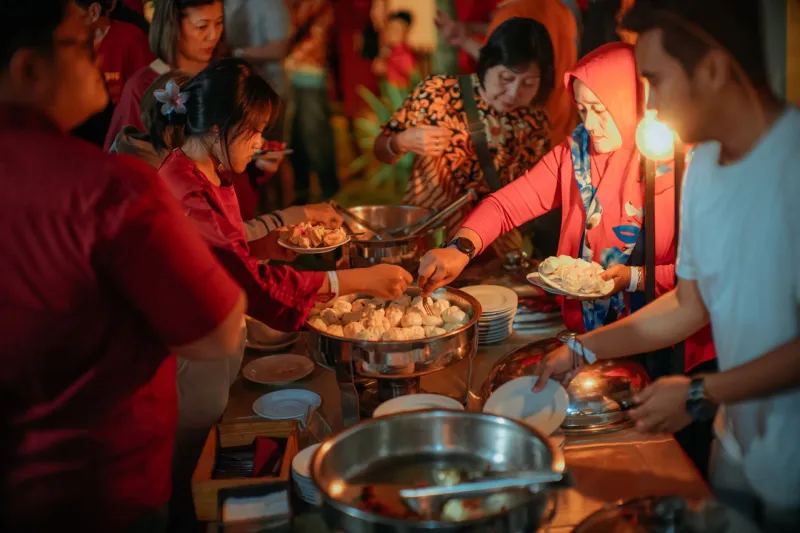
In gurdwaras across Punjab, in temple courtyards throughout Maharashtra, and in Sikh community halls from Los Angeles to New Jersey, a practice as old as organized faith itself continues to unfold each week. A meal is prepared. Tables are set. And every person who walks through the door—regardless of religion, income, caste, or social standing—is invited to sit and eat.
This is the bhandara. And in an era when one in eight Americans struggles to reliably access enough food, its underlying philosophy may represent one of the most radical and relevant blueprints available to communities searching for real solutions.
A Tradition Rooted in Radical Generosity
The word bhandara originates from Sanskrit and broadly refers to a communal feast offered as an act of devotion or service. While the practice takes different forms across Hindu, Sikh, and Jain traditions—the Sikh langar being perhaps its most globally recognized expression—the animating principle remains consistent: food is a gift, not a transaction, and no human being should be turned away from a shared table.
Unlike many Western charitable food models, which often distinguish visibly between those who serve and those who receive, the bhandara dissolves that hierarchy. Volunteers cook and serve. Community members eat. Then the volunteers sit down and eat as well. The architecture of the meal itself communicates something that no food bank pamphlet can fully convey: you belong here, and so does your hunger.
This is not a peripheral feature of the tradition. It is its entire point.
How American Communities Are Adapting the Model
Across the United States, a growing number of organizations—some rooted in South Asian faith communities, others inspired by the principle without the direct cultural lineage—are experimenting with bhandara-style programming as a response to local food insecurity.
In cities like Chicago, Houston, and the San Francisco Bay Area, South Asian diaspora organizations have expanded their traditional langar and bhandara gatherings beyond their own congregations, opening their doors to neighbors of all backgrounds. These aren't modest efforts. Some serve hundreds of meals weekly, operating on volunteer labor and community donations, with no means-testing, no proof of need required, and no application process.
Mutual aid networks in cities like Detroit and Philadelphia have adopted similar frameworks, organizing regular community meals that prioritize shared tables over transactional distribution. The language these organizers use is deliberate: they speak of feeding neighbors, not serving clients. That distinction, subtle as it may seem, carries enormous psychological weight for participants.
Faith-based nonprofits working in regions with large South Asian immigrant populations—including parts of New Jersey, Georgia, and Texas—have begun formalizing these practices into structured community programs, complete with nutritional planning, multilingual outreach, and partnerships with local farms and food suppliers. What was once an informal spiritual act is becoming an intentional community infrastructure.
The Dignity Gap in America's Food System
To understand why the bhandara model is resonating so broadly, it helps to examine what is often missing from conventional food assistance in the United States.
America's food safety net is, in many respects, an impressive logistical achievement. Food banks distribute billions of pounds of food annually. The Supplemental Nutrition Assistance Program serves over 40 million Americans. School meal programs reach tens of millions of children each day. The scale is genuinely significant.
And yet, participation rates in these programs consistently fall short of the populations they are designed to serve. Researchers and community advocates have identified a persistent barrier that transcends logistics: shame. The experience of receiving food assistance in many conventional settings—whether waiting in a distribution line, navigating a benefits application, or selecting from a limited inventory of donated goods—can feel stigmatizing in ways that discourage return visits and deter first-time participants entirely.
The bhandara tradition, by design, eliminates the conditions that generate that shame. There is no application. There is no income verification. There is no moment at which a person must identify themselves as someone in need. The meal is simply there, and the invitation is universal.
What Western Food Culture Abandoned
It is worth pausing to ask a harder question: why did so many Western food systems move away from communal, unconditional feeding models in the first place?
Historically, communal meals were not uncommon in European and American communities. Church suppers, harvest festivals, neighborhood potlucks, and mutual aid society dinners served social and nutritional functions simultaneously throughout the 19th and early 20th centuries. The industrialization of food, the privatization of eating, and the gradual dismantling of communal social infrastructure shifted the dominant model toward individual consumption and, for those in need, toward charity frameworks that imported the logic of worthiness and means-testing.
The bhandara tradition survived this shift in part because it was embedded in spiritual practice rather than social welfare policy. Its continuation was not contingent on government funding cycles or shifting political attitudes toward the poor. It persisted because communities believed, at a foundational level, that feeding others was an expression of something sacred—not a service rendered to the unfortunate.
That distinction matters enormously when we consider how to rebuild more humane food systems in the present.
Building on the Blueprint
For organizations working at the intersection of food access and community development, the bhandara model offers several transferable principles worth examining carefully.
Universality over targeting. When everyone is welcome at the table, no one bears the burden of identifying as needy. This structural choice reduces stigma and increases participation among the most food-insecure individuals, who are often the least likely to seek help under means-tested systems.
Dignity through shared labor. When community members contribute to meal preparation and service—even in small ways—the dynamic shifts from recipient to participant. This engagement fosters a sense of ownership and belonging that transactional food distribution rarely achieves.
Cultural resonance as a resource. Food carries identity. When communities are fed in ways that honor their cultural heritage, the meal becomes an act of recognition, not merely sustenance. Organizations that incorporate culturally familiar foods and cooking traditions into their programming often see stronger community engagement as a result.
Spiritual and civic integration. The bhandara's durability owes much to its embeddedness in faith communities, which provide stable volunteer networks, physical space, and a values framework that sustains the practice across generations. Secular organizations can learn from this integration by grounding their food programs in explicit community values rather than treating feeding programs as purely logistical operations.
A Living Practice for a Pressing Moment
At Bhandara Community Hub, the name we carry is not incidental. It reflects a deliberate commitment to the philosophy that giving nourishment—to bodies, to spirits, to communities—is among the most meaningful acts any organization can undertake. The bhandara is not simply a historical curiosity or a cultural artifact. It is a living practice, continuously adapted by communities who understand that the act of feeding one another is inseparable from the work of building a just and cohesive society.
As American communities grapple with persistent food insecurity, rising costs, and the fraying of social infrastructure, the ancient wisdom embedded in the bhandara offers more than inspiration. It offers a practical, tested, and deeply human model for what it means to truly nourish a community—not just its stomach, but its sense of shared dignity and mutual belonging.
The table is set. The question is whether we are ready to expand it.