The Vanishing Kitchen: How Lost Cooking Knowledge Is Widening America's Food Divide
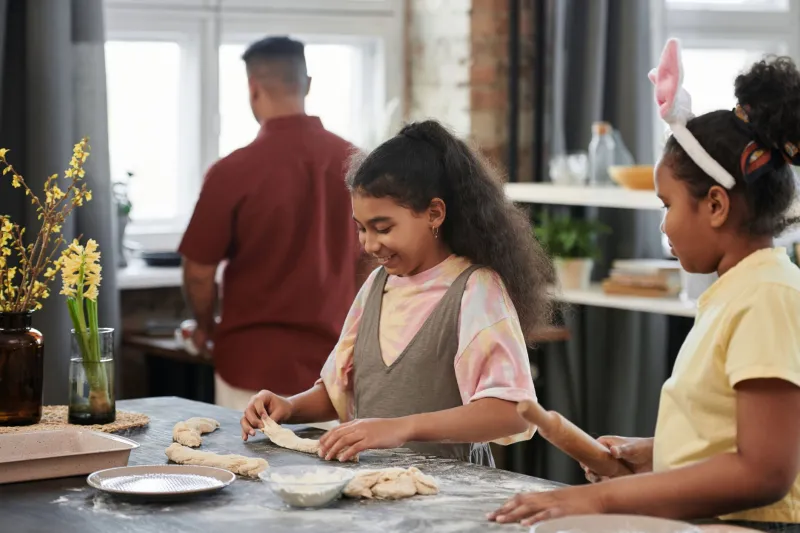
There was a time, not so long ago, when knowing how to cook was simply part of being human. Grandmothers taught granddaughters how to stretch a pound of dried beans into a week of satisfying meals. Fathers demonstrated how to turn a modest cut of meat into something tender and flavorful. These were not culinary arts reserved for the privileged—they were survival skills, passed quietly across kitchen tables from one generation to the next.
That transmission has fractured. And the consequences, particularly for low-income households across the United States, are far more serious than most public conversations acknowledge.
A Skill Set in Decline
Over the past four decades, the average American household has dramatically reduced the time it spends preparing food at home. Research from the Bureau of Labor Statistics consistently shows that Americans spend less time cooking than their counterparts in previous generations, with lower-income households experiencing some of the steepest declines. The reasons are layered and intertwined: longer working hours, the proliferation of cheap fast food, shrinking household sizes, and the gradual disappearance of home economics education from public schools.
When cooking is no longer taught at home and no longer reinforced in schools, an entire generation grows to adulthood without the foundational knowledge to feed themselves and their families affordably and well. The result is a population that increasingly depends on pre-packaged, processed, or restaurant-prepared food—options that are often more expensive per calorie, less nutritious, and less sustainable over time.
For families already navigating the pressures of poverty, this dependency is not a minor inconvenience. It is a structural disadvantage that compounds financial strain and health vulnerability simultaneously.
When Culture Leaves the Kitchen
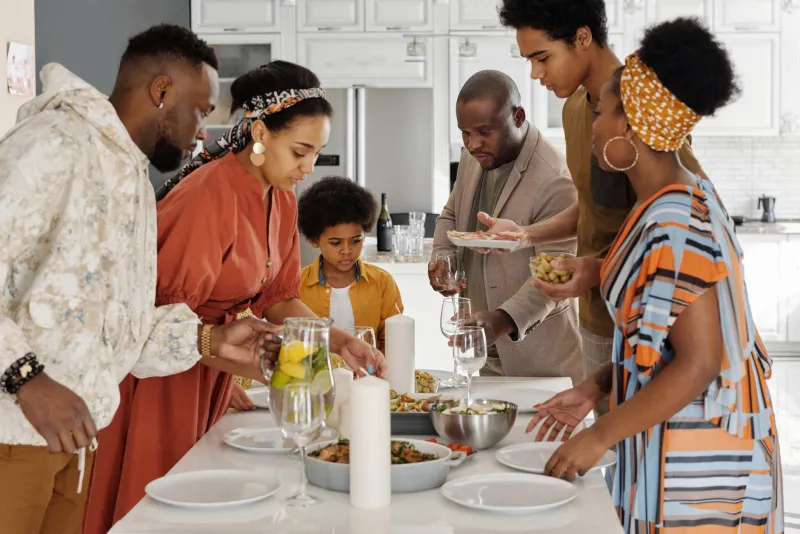
The erosion of cooking knowledge is not only a practical problem—it is a cultural wound. For many immigrant communities, Indigenous populations, and communities of color throughout the United States, food has historically served as one of the most resilient expressions of identity, memory, and belonging. Recipes carried across borders or preserved through generations of hardship represent something irreplaceable: a living connection to ancestry and community.
When those recipes disappear—whether through assimilation pressure, displacement, or the simple absence of time and opportunity—something profound is lost alongside the nutritional benefits. Families report feeling disconnected not only from their food but from their own histories. Children grow up without the sensory memory of a grandmother's stew or a father's slow-cooked greens, and with that loss comes a diminished sense of cultural rootedness.
Community organizations across the country are beginning to recognize this intersection of food access, cultural identity, and practical skill as a critical site for intervention. At Bhandara Community Hub, we believe that nourishing lives means attending to the whole person—and that includes honoring the cultural knowledge that has long sustained communities through hardship.
Programs That Are Rebuilding What Was Lost
In cities from Detroit to Houston to rural Appalachian communities, a growing movement of community-based culinary education programs is working to restore what decades of systemic neglect have eroded. These initiatives go well beyond basic cooking demonstrations. They are intentional, culturally grounded, and designed to address the specific barriers that low-income families face.
Some programs pair cooking instruction with nutrition education and grocery budgeting workshops, recognizing that knowing how to cook is only useful if one also knows how to shop strategically and affordably. Others focus explicitly on cultural reclamation, inviting elders to share traditional recipes with younger community members in structured intergenerational settings. Still others are embedded within schools, after-school programs, or community health centers, making the learning accessible to those least likely to seek it out on their own.
Participants in these programs frequently describe a shift that extends beyond the kitchen. Learning to prepare a meal from scratch—to understand how ingredients interact, how to improvise with what is available, how to feed a family on a limited budget without sacrificing nourishment—generates a sense of competence and agency that carries into other areas of life. For many, it is among the most empowering experiences they have encountered within a social services context.
The Policy Gap
Despite the documented benefits of food and nutrition education, public investment in this area remains fragmented and underfunded. The removal of home economics from most public school curricula, beginning in earnest in the 1980s and accelerating through the 1990s and 2000s, left a vacuum that community organizations are now struggling to fill with limited resources.
Advocates argue that restoring some form of practical food education within public schools—updated to reflect contemporary nutritional science and culturally inclusive content—would represent a meaningful investment in long-term public health. Several states have begun exploring this possibility, though comprehensive reform remains elusive.
At the federal level, programs such as SNAP-Ed (the Supplemental Nutrition Assistance Program's education component) provide funding for community-based nutrition education. However, critics note that these resources are often stretched thin and inconsistently distributed, with rural and underserved urban communities frequently receiving less support than their needs would warrant.
Reclaiming the Table
The act of cooking is, at its core, an act of care—for oneself, for family, for community. When that act becomes inaccessible, when it is perceived as a luxury requiring time, equipment, or knowledge that many households simply do not possess, the consequences ripple outward in ways that no single policy intervention can fully address.
What is needed is a sustained, community-rooted commitment to treating culinary knowledge as the essential life skill it has always been. That means investing in programs that meet people where they are, that honor the cultural dimensions of food, and that recognize the profound relationship between cooking, health, dignity, and self-determination.
The kitchen, for all its ordinariness, has long been a site of community formation and resilience. Rebuilding access to that space—not just physically, but in terms of knowledge and confidence—is among the most meaningful contributions community organizations can make to the families they serve.
At Bhandara Community Hub, that commitment is central to our mission. Nourishing lives means ensuring that every person, regardless of income or background, has the knowledge and resources to feed themselves and their loved ones with dignity.