Corner Store as Community Cornerstone: How Immigrant Grocers Are Quietly Solving America's Food Desert Crisis

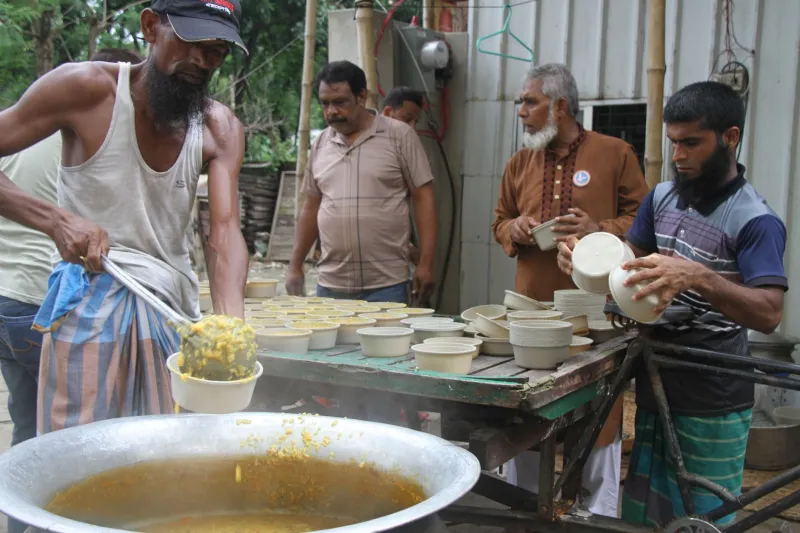
Photo: Crawford, Ruth, Public domain, via Wikimedia Commons
A Different Kind of Infrastructure
Walk down the right block in almost any American city—Detroit's west side, Houston's Gulfton corridor, Chicago's Little Village, or the Flatbush neighborhood of Brooklyn—and you will find a store that does not appear in most food policy discussions. It may have hand-lettered signs in two languages. Its shelves may hold dried tamarind pods alongside canned tomatoes, fresh chiles beside iceberg lettuce. The owner likely knows your name.
These are the immigrant-owned corner stores and specialty grocers that have quietly become the most reliable food infrastructure in neighborhoods that larger retailers abandoned decades ago. They are not celebrated at food justice conferences with the same frequency as urban farms or co-op grocery initiatives. They rarely receive the foundation grants or municipal contracts that flow toward more visible interventions. Yet their contribution to food security in low-income American communities is both substantial and underappreciated.
Understanding why these stores matter—and what they need to survive—is essential to any honest conversation about ending food insecurity in the United States.
What a Food Desert Actually Looks Like
The United States Department of Agriculture defines a food desert as a low-income census tract where a significant portion of residents lives more than one mile from a supermarket in urban areas, or more than ten miles away in rural ones. By that measure, roughly 19 million Americans currently live in food deserts. But the statistic obscures as much as it reveals.
What it does not capture is the presence of the small, independent grocer operating in that same census tract—the Yemeni-owned corner market in Cleveland, the Cambodian grocery in Lowell, Massachusetts, the West African provisions store in the Bronx. These establishments frequently do not meet the USDA's definition of a full-service supermarket, yet they often stock fresh produce, whole grains, legumes, and culturally specific ingredients that their customers cannot find anywhere else within reasonable distance.
For many families, the neighborhood spice merchant is not a supplement to their food system. It is the food system.
The Credit Economy Nobody Talks About
One of the least-documented practices in small immigrant grocery retail is the informal extension of credit to regular customers. It is a tradition with deep roots in the cultures from which many of these merchants come—a practice sometimes called khata in South Asian communities, or simply "running a tab" in the American vernacular.
In practical terms, it means that a family facing a difficult week between paychecks can still feed their children. The grocer records the amount owed, the customer repays when able, and no interest accrues. No credit check is required. No application is filed.
This system functions because it is built on relationship rather than transaction. The merchant knows the family. The family knows the merchant. Trust is the collateral. In a landscape where predatory payday lenders and high-fee check-cashing services proliferate in low-income neighborhoods, the informal credit extended by a trusted local grocer represents a meaningful form of financial relief—one that is invisible to most economic analyses.
Cultural Continuity as Food Security
Food security is typically measured in calories and nutrients. But for immigrant families and communities of color, food security also means access to the ingredients that make a meal recognizable—that connect a plate of food to a family's history, identity, and sense of belonging.
The spice merchant model addresses this dimension of food access in a way that large chain supermarkets almost never do. A Somali family in Minneapolis cannot simply substitute one dried pepper for another. A Vietnamese grandmother in San Jose cannot replicate her pho with a different variety of star anise. The ingredients are not interchangeable, and their unavailability is not a trivial inconvenience—it represents a form of cultural erasure that compounds the other indignities of economic marginalization.
Immigrant grocers stock these items because they understand their customers' needs from the inside. They are, in many cases, members of the same community. This insider knowledge is a competitive advantage that no amount of corporate market research can replicate, and it is precisely why these stores continue to serve neighborhoods that national chains have deemed insufficiently profitable.
Resilience Under Pressure
Small immigrant-owned grocers operate under conditions that would challenge any business. Margins in grocery retail are among the thinnest in any sector. Supply chain disruptions—which became catastrophically visible during the COVID-19 pandemic—hit small independent retailers with particular force, as they lack the purchasing power and logistics networks of large chains.
And yet, many of these stores survived the pandemic when larger competitors did not. Their resilience strategies are instructive. Many pivoted quickly to delivery and curbside service, leveraging deep relationships with loyal customers. Others diversified into prepared foods, drawing on culinary traditions that gave them a product no chain store could match. Several formed informal purchasing cooperatives with neighboring immigrant-owned stores, pooling orders to achieve better pricing from distributors.
These adaptations were not the result of business school training or access to capital. They were the result of necessity, creativity, and the kind of community trust that takes years to build.
What Recognition—and Investment—Would Look Like
If small immigrant grocers are genuinely functioning as anchors of food security in underserved neighborhoods, then food justice policy must begin to treat them accordingly.
This means several things in practice. It means expanding eligibility for Supplemental Nutrition Assistance Program (SNAP) equipment grants to include small independent retailers, not just large supermarkets. It means creating municipal loan programs specifically designed for immigrant-owned food businesses, with application processes that do not require the kind of documentation that excludes many community members. It means ensuring that healthy food incentive programs—such as Double Up Food Bucks, which matches SNAP spending on fresh produce—are accessible at small corner stores, not only at farmers' markets.
It also means something less tangible: recognition. The food justice movement has rightly elevated urban farms, community kitchens, and cooperative grocery models as transformative interventions. The immigrant spice merchant deserves a place at that same table. Their work is not a stopgap measure or a symptom of market failure. It is a model of community-centered food provision that has been functioning effectively, often without external support, for generations.
Nourishment as Neighborhood
At Bhandara Community Hub, we believe that food security is inseparable from community strength. The corner store that extends credit to a struggling family, stocks the spices that make a diaspora community feel at home, and stays open on the block that every chain store abandoned—that store is not just a retail establishment. It is a form of community infrastructure.
Investing in its survival is an act of community development. Supporting the merchant who runs it is an act of solidarity. And recognizing what it provides is, at the very least, an act of honesty about where food security in America actually comes from.