Manufactured Appetite: How Predatory Food Marketing Exploits Under-Resourced Neighborhoods — and How Communities Are Striking Back
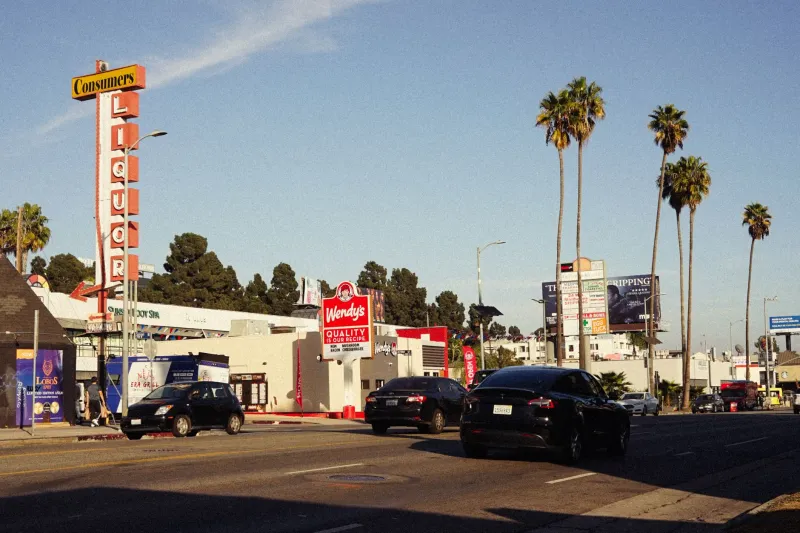
Drive through any low-income urban neighborhood in America and a pattern emerges with striking consistency. Fast food restaurants cluster at intersections. Convenience stores display floor-to-ceiling advertisements for sugary beverages and snack products. Digital billboards cycle through promotions for dollar menu items and energy drinks. Meanwhile, in more affluent ZIP codes just miles away, those same advertising spaces often feature fitness studios, organic meal delivery services, or financial institutions.
This is not coincidence. It is strategy — deliberate, data-driven, and decades in the making.
The food and beverage industry spends more than $14 billion annually on advertising in the United States, according to figures published by the Rudd Center for Food Policy and Health at the University of Connecticut. A significant and well-documented portion of that investment is concentrated in communities with lower household incomes and higher proportions of Black, Latino, and Indigenous residents. The result is an environment where the path of least resistance — the cheapest, most accessible, most heavily promoted food option — is almost always the least nutritious one.
For organizations committed to nourishing lives and strengthening communities, understanding this system is not merely an academic exercise. It is the foundation of effective advocacy.
The Architecture of Targeted Saturation
Researchers at the University of Pennsylvania's Wharton School and elsewhere have documented what industry insiders have long known: low-income neighborhoods are disproportionately exposed to outdoor advertising for fast food, alcohol, and ultra-processed snack products. A 2019 study published in the American Journal of Preventive Medicine found that predominantly Black neighborhoods contained significantly more fast food advertisements per capita than predominantly white neighborhoods of comparable population density.
Digital marketing has accelerated this disparity. Social media platforms use sophisticated demographic and behavioral targeting algorithms that allow food companies to direct advertisements for high-calorie, low-nutrient products toward users who exhibit economic vulnerability — those who search for discount coupons, engage with dollar store content, or reside in certain ZIP codes. Children and adolescents in these communities are particularly exposed. The Rudd Center's research has consistently shown that Black and Hispanic youth see substantially more television advertisements for sugary cereals, fast food, and candy than their white peers.
In-store marketing compounds the effect. Convenience stores and small grocery retailers in food-insecure neighborhoods — often the primary food source for residents without reliable transportation — are frequently paid by manufacturers to position certain products at eye level, near checkout counters, and at the entrance. These placements are not random; they are contractual arrangements designed to maximize impulse purchasing of high-margin, low-nutrition items.
The Health Consequences Communities Cannot Afford
The downstream effects of this manufactured food environment are reflected in public health data that community organizations encounter daily. The Centers for Disease Control and Prevention reports that rates of Type 2 diabetes, hypertension, and obesity are substantially higher in low-income communities than in higher-income ones. While poverty itself is a multifactorial driver of these disparities, researchers consistently identify diet quality — shaped in part by the commercial food environment — as a significant contributing variable.
Chronic illness does not merely affect individual wellbeing. It strains community resources, reduces workforce participation, increases healthcare costs that families cannot absorb, and shortens lives. When a neighborhood's food environment is engineered to produce poor nutritional outcomes, the consequences ripple outward across generations.
Community health workers describe what might be called a trap of manufactured preference. When children grow up surrounded by aggressively marketed ultra-processed foods — when those are the tastes normalized from infancy, the options available at school vending machines, the products celebrated in the media they consume — genuine food autonomy becomes structurally compromised before it is ever exercised.
Grassroots Organizations: Building the Counter-Narrative
Across the country, community organizations are developing innovative, culturally grounded strategies to interrupt these cycles. Their approaches share a common thread: rather than simply informing residents that certain foods are unhealthy, they work to rebuild the community's relationship with food from the ground up — addressing environment, culture, and economic access simultaneously.
Media literacy as a community tool. Organizations in cities including Chicago, Detroit, and Los Angeles have integrated food marketing literacy into youth programming. These curricula teach young people to decode advertising techniques — the use of color psychology, celebrity endorsement, artificial scarcity messaging, and portion distortion — turning passive consumers into critical analysts. When a teenager understands that a fast food commercial is engineered to trigger dopamine responses, the advertisement loses a measure of its power.
Community-led counter-advertising. Some neighborhood organizations have partnered with local artists and muralists to reclaim visual public space. In place of billboards promoting sugar-laden beverages, community-commissioned murals celebrate local food traditions, seasonal produce, and the cultural heritage of the neighborhood's residents. These projects serve dual purposes: they disrupt the visual dominance of commercial food marketing while affirming community identity and pride.
Advocacy for zoning and advertising policy. Several grassroots coalitions have brought the evidence on targeted marketing to city councils and public health boards, advocating for restrictions on fast food density near schools, limits on outdoor advertising for unhealthy products in residential areas, and mandatory disclosure requirements for in-store marketing contracts. While these campaigns face significant industry opposition, they have achieved meaningful policy changes in jurisdictions including Baltimore and Philadelphia.
Building alternative food economies. Perhaps the most durable counter-strategy is the creation of community-controlled food infrastructure — cooperative grocery stores, community-supported agriculture programs, farmers markets that accept SNAP and WIC benefits, and community kitchens that produce and distribute culturally relevant, nutritious food. When residents have genuine alternatives, the monopoly that predatory marketing depends upon begins to erode.
The Role of Institutions in Amplifying Community Voice
Grassroots organizations cannot carry this work alone. Hospitals, universities, faith communities, and public health agencies have both the resources and the institutional credibility to amplify community-led advocacy. Partnerships that center community expertise — rather than positioning outside institutions as experts delivering solutions — have consistently demonstrated greater effectiveness and sustainability.
Philanthropic and public funding directed toward food marketing research in under-resourced communities remains insufficient relative to the scale of the problem. Expanding that investment, and ensuring that affected communities have meaningful input in how research findings are used, is an urgent institutional responsibility.
Reclaiming the Right to a Fair Food Environment
At its core, the issue of predatory food marketing is one of equity and autonomy. Every community deserves a food environment that supports — rather than systematically undermines — its members' health and self-determination. The fact that some neighborhoods have been deliberately saturated with marketing for products that erode health, while others have not, is not a neutral market outcome. It is a structural injustice that demands a structural response.
The organizations working on the front lines of this challenge are not simply fighting against harmful advertising. They are building something affirmative: communities where residents understand the forces shaping their choices, where local food cultures are celebrated and sustained, and where access to nourishing food is treated as the fundamental right it has always been.
That work is difficult. It is ongoing. And it is among the most important community-building efforts of our time.