Perfectly Good Food, Perfectly Wasted: How America's Obsession With Flawless Produce Is Fueling Hunger — and What Communities Can Do About It
Somewhere in California's Central Valley, a field of carrots is being plowed under. Not because they are rotten, diseased, or unsafe. Not because there is no one who would eat them. They are being destroyed because they are crooked. In a retail environment that prizes uniformity — where a carrot must conform to a particular diameter, length, and curvature before a major grocery chain will accept it — a vegetable that grew in the wrong direction has no commercial future.
This scene repeats itself across American agriculture with a frequency and scale that ought to provoke outrage. The United States Department of Agriculture estimates that between 30 and 40 percent of the nation's food supply is wasted. A substantial portion of that waste occurs not in household refrigerators or restaurant kitchens but in the fields and packing sheds where produce is sorted, graded, and rejected before it ever reaches a store shelf. Meanwhile, more than 44 million Americans — including 13 million children — experience food insecurity in any given year.
The coexistence of these two realities is not a paradox. It is a policy failure, a market failure, and a community failure — and it is one that a growing number of organizations, farmers, and advocates are working, with notable success, to correct.
The Architecture of Rejection
To understand why so much edible food is discarded, it is necessary to understand the aesthetic standards that govern American produce markets. Major retailers have historically imposed strict cosmetic specifications on their suppliers — requirements covering size, shape, color, and surface blemishes that have little or no relationship to nutritional value or food safety. A strawberry with a minor surface scar is indistinguishable in taste and nutrition from a flawless one, but it will not survive a retail buyer's inspection.
Farmers are not the villains in this story. They operate within a system that penalizes deviation from cosmetic norms at every level. Packing and sorting costs are incurred regardless of whether a piece of fruit meets specifications, and the labor required to harvest imperfect produce is identical to that required for perfect produce. When markets will not pay for cosmetically flawed items, farmers frequently find that the cost of harvesting them exceeds any revenue they might generate — making it economically rational, within the current system, to leave crops in the field.
Retailers have begun to shift in recent years, with some chains introducing "imperfect" or "ugly" produce lines at reduced prices. These initiatives are meaningful, but they address only a fraction of the surplus and tend to serve consumers who are already food-secure. The deeper structural problem — the vast quantities of produce that never reach any retail channel at all — remains largely unaddressed by market-driven solutions alone.
What Gleaning Taught America's Ancestors — and What It Can Teach Us Now
The practice of gleaning — allowing those in need to gather crops left behind after a commercial harvest — is among the oldest food justice traditions in human history. Referenced in the Hebrew Bible, practiced across medieval Europe, and embedded in the agricultural customs of cultures around the world, gleaning represents a foundational moral claim: that food which exists and is needed should reach those who need it, regardless of its commercial value.
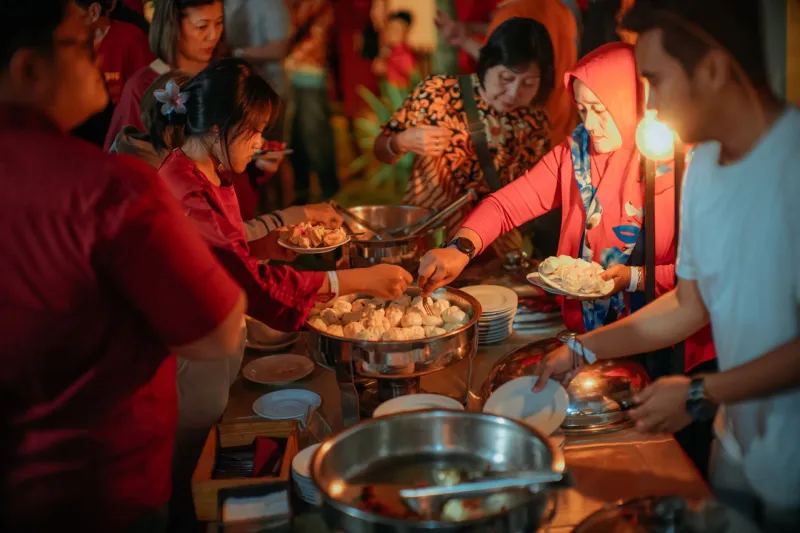
This principle resonates deeply with the spirit of the bhandara tradition, in which food is offered without judgment and without precondition. A bruised apple is no less nourishing for its bruise. A misshapen pepper is no less valuable to a family that is hungry. The rejection of food on cosmetic grounds is, from this perspective, not merely a logistical inefficiency — it is a statement about whose needs matter and whose do not.
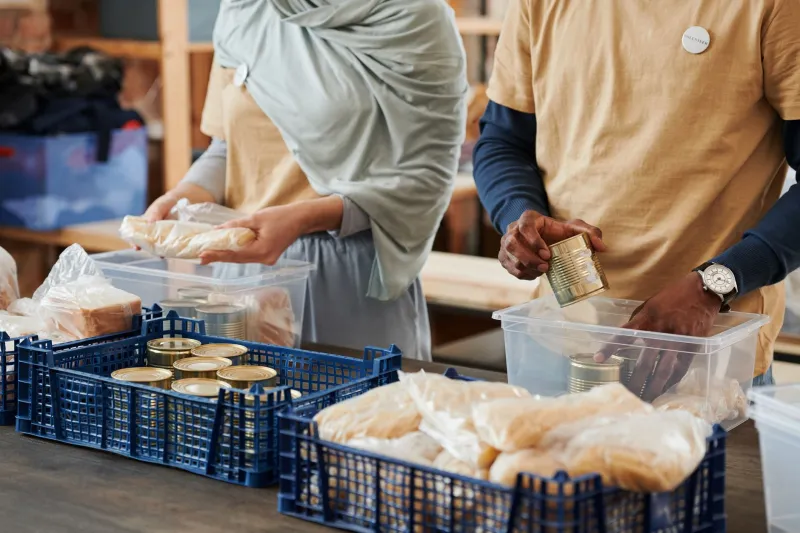
Modern gleaning programs are applying this ancient logic to contemporary agricultural systems, and the results are substantial. The Society of St. Andrew, operating across more than 20 states, has recovered hundreds of millions of pounds of produce through organized gleaning efforts over several decades. State-level networks such as the California Association of Food Banks coordinate gleaning operations that funnel surplus directly to regional food banks and community distribution sites.
Innovative Models Closing the Gap
Beyond traditional gleaning, a new generation of surplus food initiatives is emerging, combining logistical sophistication with community-centered values.
Surplus Food Hubs function as clearinghouses connecting farmers, distributors, and food manufacturers with food banks, community kitchens, and direct distribution programs. Organizations such as Imperfect Foods (which pivoted from a direct-to-consumer model) and regional nonprofits like Farm to Pantry in California have demonstrated that the logistical challenges of surplus recovery — transportation, refrigeration, sorting — can be overcome with adequate organizational infrastructure and funding.
Community Supported Agriculture (CSA) Equity Programs have begun incorporating surplus and imperfect produce into subsidized share programs for low-income households. Several farms in the Pacific Northwest and New England offer tiered pricing structures in which market-rate subscribers effectively subsidize reduced-cost or free shares for community members experiencing food insecurity — a model that moves cosmetically imperfect produce while building relationships between farms and the communities they serve.
Urban Surplus Markets — operated by organizations such as Daily Table in the Boston area — purchase surplus and near-expiration food from manufacturers and distributors and sell it at deeply reduced prices in underserved neighborhoods. These models honor the dignity of participants by preserving the market relationship rather than positioning recipients as charity cases, while simultaneously capturing food that would otherwise be discarded.
Food Recovery Networks on College Campuses engage student volunteers in recovering surplus dining hall food and redistributing it to on-campus food pantries and local partner organizations. With more than 3,000 colleges and universities operating in the United States, the cumulative potential of this model is significant.
How Your Organization Can Start
For community organizations, faith communities, and neighborhood associations ready to engage with surplus produce recovery, the following framework offers a practical starting point.
Step One: Map Local Surplus Sources. Identify farms, farmers markets, grocery stores, food distributors, and food manufacturers within your service area. Many are already seeking partners for surplus donation and may be eligible for federal tax deductions under the Good Samaritan Food Donation Act, which provides liability protection for good-faith food donors.
Step Two: Build Cold Chain Capacity. Produce recovery requires refrigerated storage and, in many cases, refrigerated transportation. Partnerships with existing food banks, community centers with commercial kitchen facilities, or local businesses with refrigeration assets can address this barrier without requiring major capital investment.
Step Three: Engage the Community in Distribution Design. The most effective surplus programs are designed with, not merely for, the communities they serve. Consulting with intended recipients about distribution timing, culturally relevant produce varieties, and preferred formats — whole produce versus prepared meals — dramatically improves uptake and reduces secondary waste.
Step Four: Document and Advocate. Tracking the volume of food recovered, the number of households served, and the estimated nutritional value of distributions creates a compelling evidence base for expanded funding and policy support. Organizations that document their impact are better positioned to advocate for systemic changes — including stronger cosmetic standard reform, expanded gleaning access rights, and increased public funding for food recovery infrastructure.
Reframing the Conversation
The language commonly used to describe this issue — "ugly produce," "food waste," "surplus" — carries subtle implications worth examining. These terms frame the problem primarily as one of inefficiency or aesthetics, obscuring the deeper moral dimension. When a community organization recovers a truckload of imperfect tomatoes and distributes them to families who could not otherwise afford fresh produce, the transaction is not merely logistical. It is an assertion that those families deserve nourishment without precondition — that the value of food lies in what it provides to human beings, not in what it returns to a supply chain.
This is precisely the understanding that animates the bhandara tradition and the work of Bhandara Community Hub. Food that nourishes is good food, regardless of its shape, size, or commercial classification. The systems that consign edible abundance to landfills while millions go without are not inevitable features of modern agriculture. They are choices — and choices can be changed, beginning at the community level, one recovered harvest at a time.